"The Galloper's Bite: Small Guns, Big Impact in 1776–77"
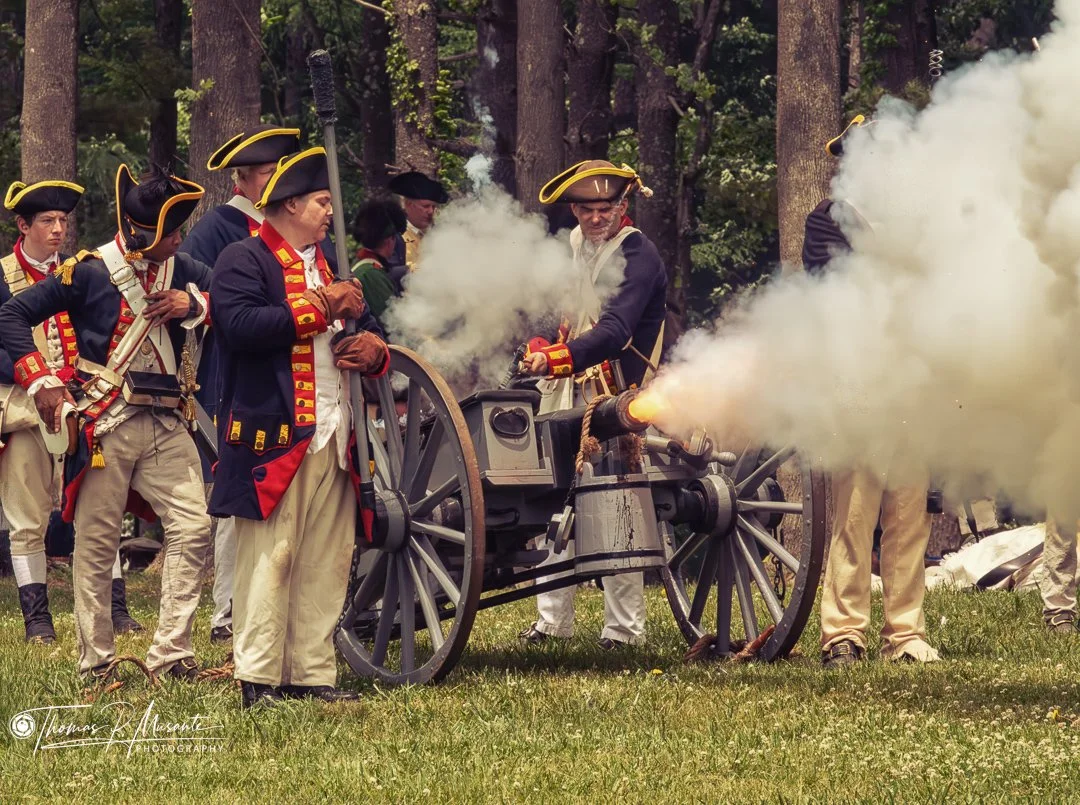
At the recent Putnam County Heroes Battle the Redcoats event in Carmel, NY, a compact iron 3-pounder cannon from 1777 roared to life once more. Nicknamed “gallopers” or “grasshoppers” (depending on the side) for their lively recoil and nimble movement across fields, these light field pieces delivered outsized punch in the fluid, hard-fought battles of the American Revolution. Far from the massive siege guns that dominated formal engagements, 3-pounders provided mobile artillery support that could keep pace with infantry and turn the tide in skirmishes.
Historical Context British forces favored these lightweight bronze or iron 3-pounders as battalion guns. Designed for rapid repositioning—often manhandled by crews using ropes and shafts or towed by limber—they excelled in the irregular warfare of 1776–77. A typical grasshopper had a short barrel (around 3–4 feet), fired a 3-pound solid iron shot (roughly 2.75–3 inches in diameter), and achieved effective ranges of 400–800 yards (up to about 1,000 yards maximum depending on elevation and charge).
Crews of 4–6 men (sometimes more with infantry support) could load and fire with impressive speed—up to four rounds per minute when well-drilled—using fixed cartridges. Ammunition options included solid shot for battering structures and grapeshot or canister for devastating anti-personnel fire at closer ranges.
These small guns proved decisive in raids and running fights, such as General William Tryon’s 1777 expedition targeting Danbury’s Continental supplies.
Battalion Integration A typical British battalion of roughly 500–600 men (often fewer in the field) was supported by a pair of these grasshoppers, giving commanders agile firepower that could move with the infantry across broken terrain like the Hudson Valley and Connecticut hills. On the American side, organization was more fluid due to shortages; Continental regiments targeted a similar pair of light 3- or 4-pounder galloper guns per battalion or brigade attachment, emphasizing mobility in militia-style defense.
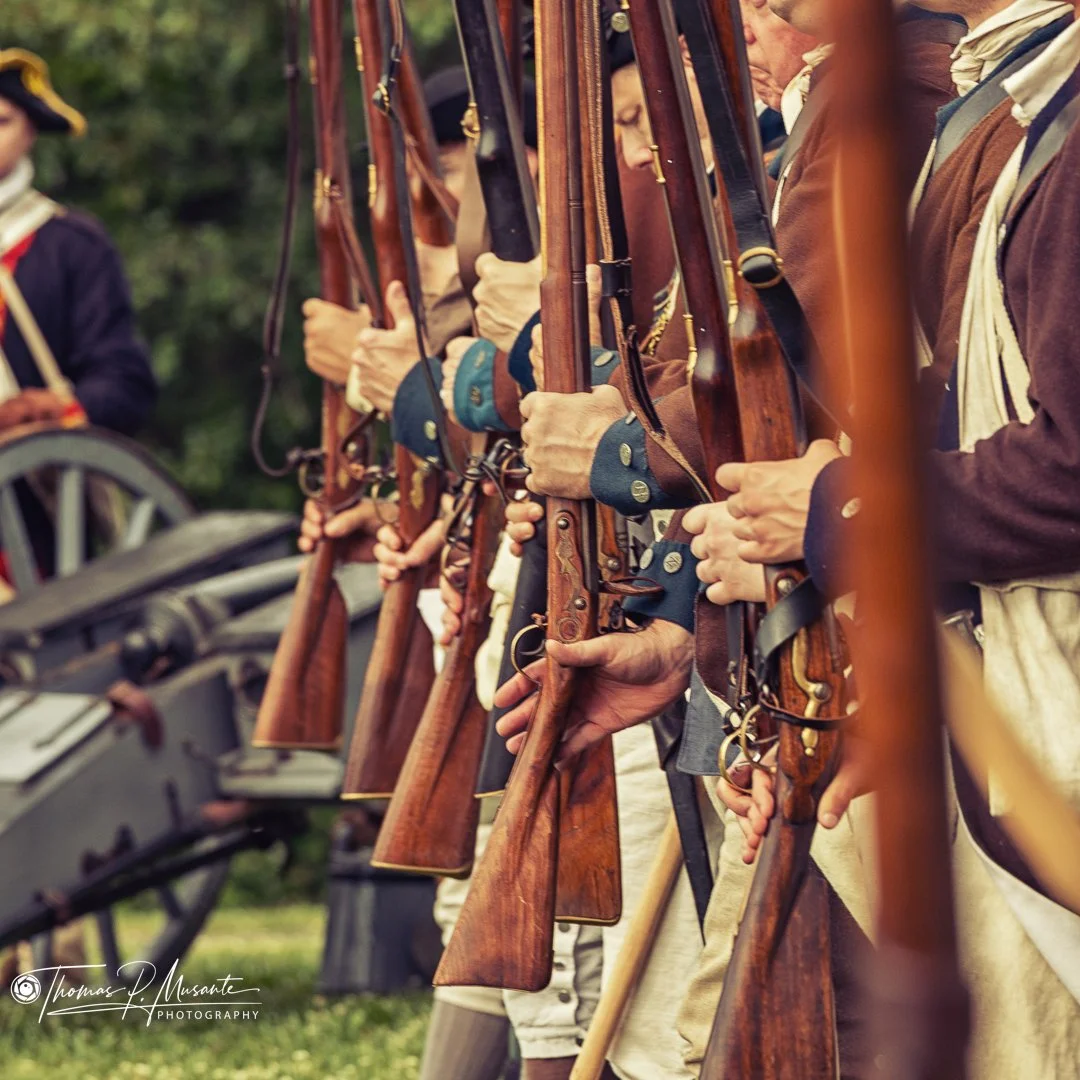
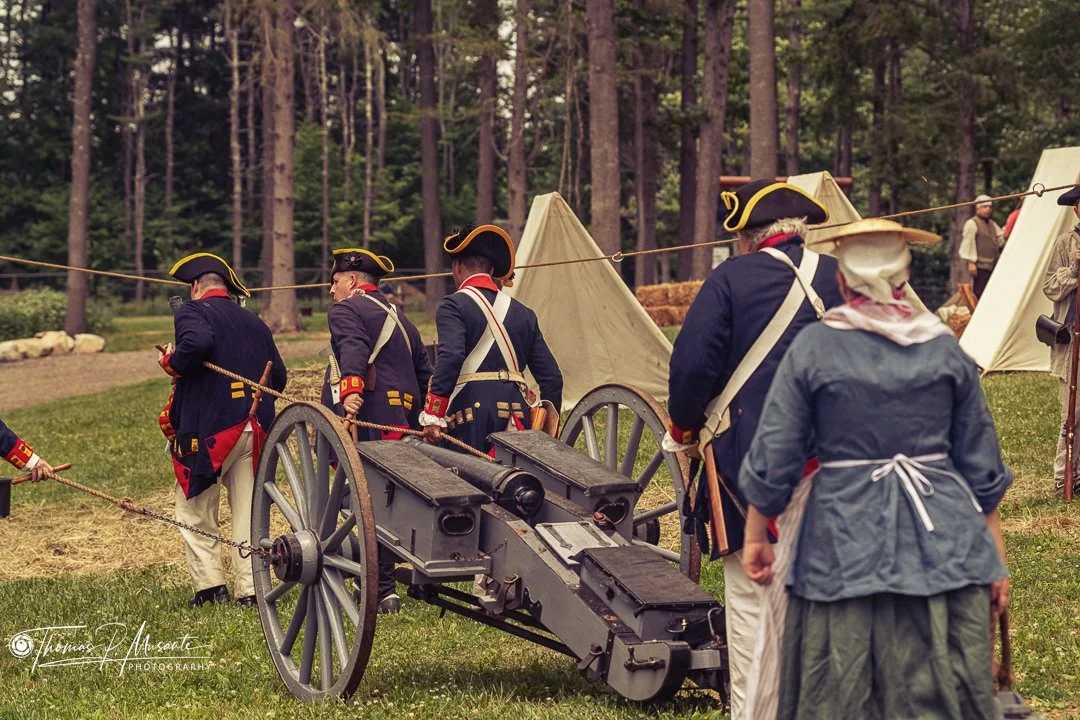
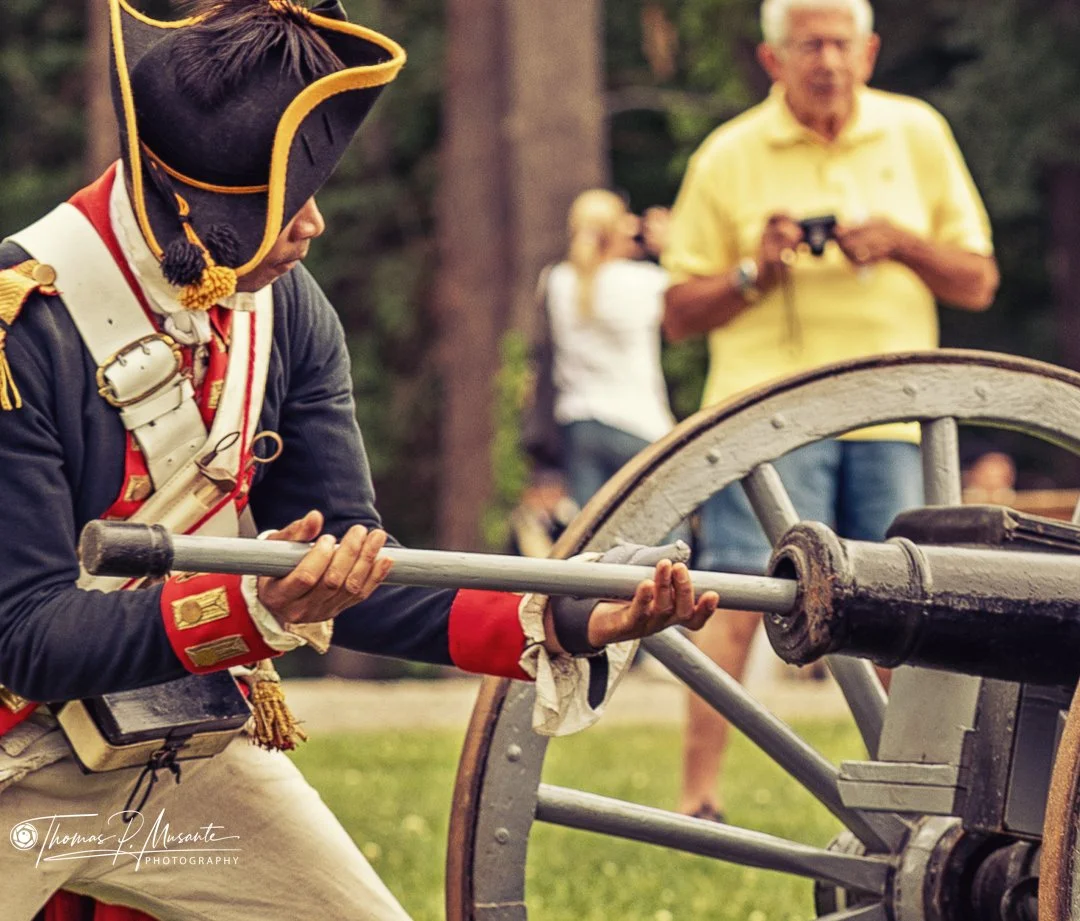
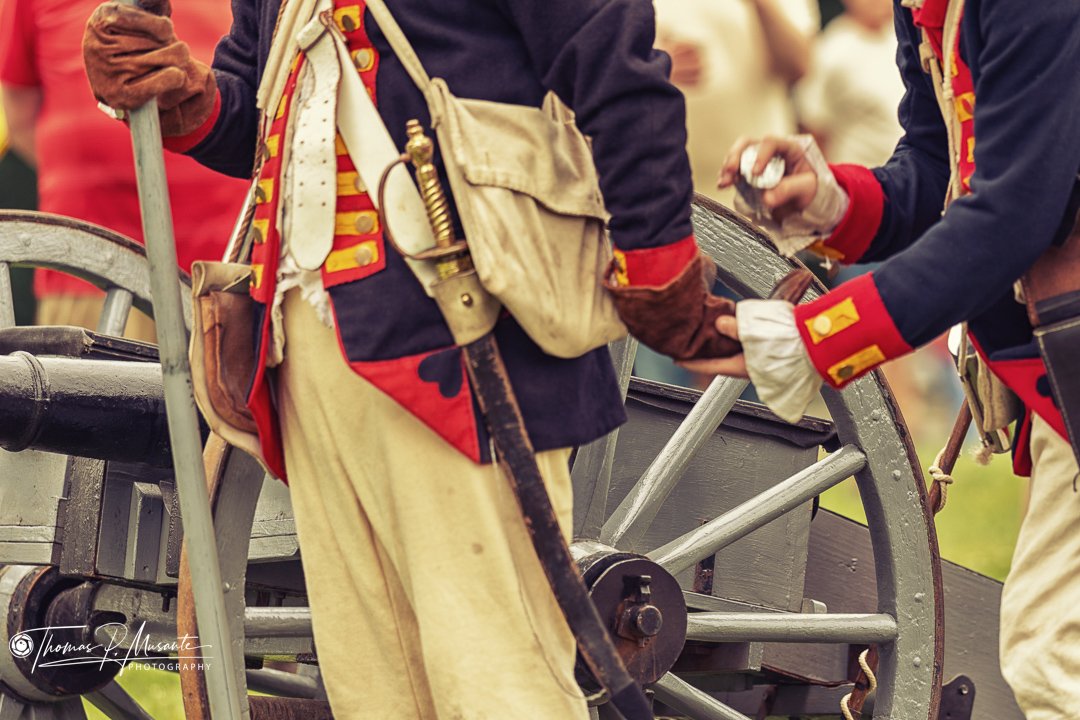
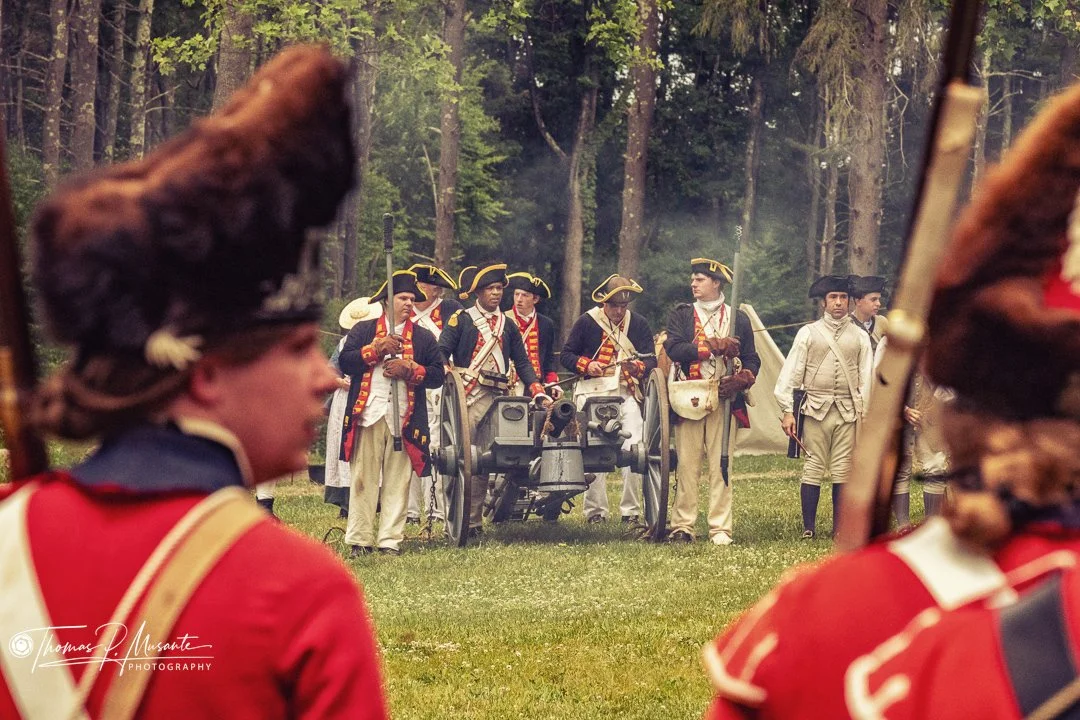
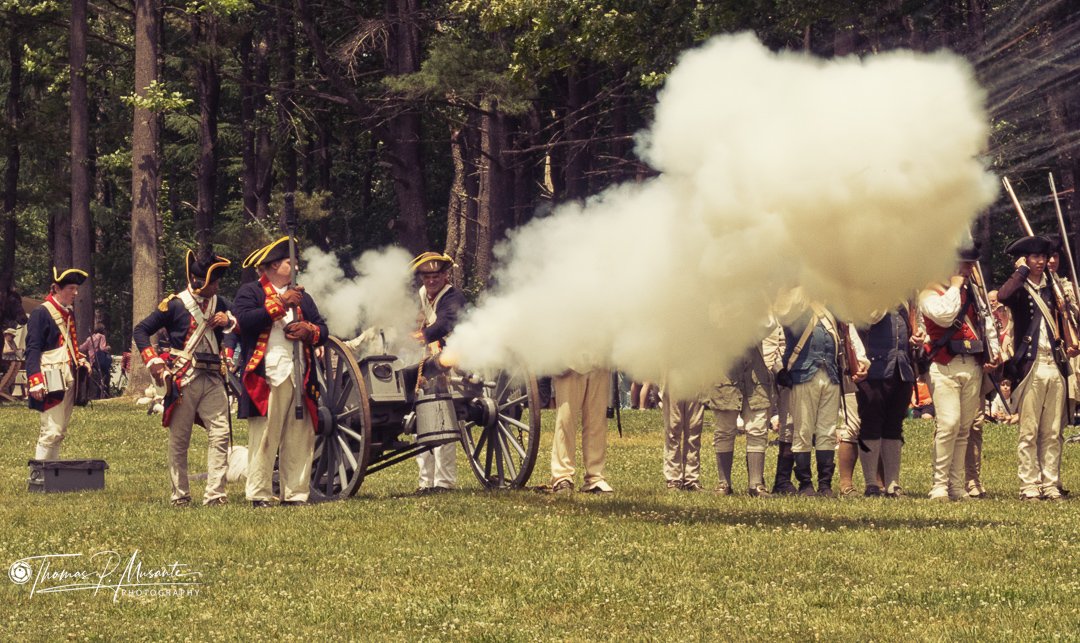
The Putnam County 3-Pounder in 2026 Fast-forward to June 6, 2026, at Putnam County Veterans Memorial Park. The Patterson, NY-based 1777 three-pounder took center stage during battle demonstrations. I was able to capture decisive moments: the coordinated dance of the crew—sponge, load, ram, prime, fire—the tension in faces before the command, the puff of smoke, and the post-shot teamwork as they repositioned the lightweight carriage.
Why They Mattered – Tactical Impact In an era before standardized field artillery, gallopers gave commanders flexibility in raids, skirmishes, and fluid engagements. Their mobility compensated for limited numbers and proved especially valuable in the irregular fighting of the Revolutionary War.
Closing Reflection The galloper’s bite reminds us that the Revolution was won not just by grand strategy but by adaptable tools and dedicated people on the ground. Seeing this 1777 survivor thunder again in Putnam County during our 250th commemorations brings history full circle—small guns, big echoes that still resonate in 2026.
Sources
Wikipedia: Grasshopper Cannon (historical overview and specifications)
John’s Military History / Caruana, Grasshoppers and Butterflies (technical analysis of light 3-pounders)
National Park Service battlefield reports (Tryon’s Raid, Ridgefield, Cowpens)
Putnam County Rev 250 and 5th NY Regiment event pages (June 6, 2026 details)
Revolutionary War artillery doctrine resources (battalion gun organization)
Copyright: © 2026 Tom Musante tmusantephotography.com