Green-Wood Cemetery - Brooklyn
Green Wood
Green-Wood Cemetery sits on land shaped long before the American Revolution. Battle Hill, its highest point, rises about 216 feet above sea level as part of the Harbor Hill Moraine. This ridge of glacial debris was left behind during the last Ice Age when glaciers advanced and retreated, piling up rocks, sand, and clay into the rolling hills and valleys we see today in Brooklyn.
On August 27, 1776, those heights played a key role in the Battle of Long Island, also known as the Battle of Brooklyn. American troops under General Samuel Holden Parsons rushed to seize the hill from British forces under General James Grant. In fierce fighting, the outnumbered Americans held their ground for a time and inflicted the heaviest casualties the British suffered anywhere that day. Though the larger battle ended in retreat for the Continental Army, the stand on Battle Hill bought precious time and highlighted the determination of the patriot forces.
The land later became Green-Wood Cemetery, one of America’s first rural cemeteries. Founded in 1838, it was designed as a peaceful, landscaped burial ground away from the crowded city churchyards. Landscape architect David Bates Douglass created winding paths, ponds, and plantings that turned the site into a popular destination for both the living and the dead. By the mid-1800s, it had gained fame for its beauty and became a fashionable place for New Yorkers to be laid to rest. In fact, for a period of time in the mid to late 1800’s it was second only to Niagara Falls in terms of visitors per year in New York state.
Battle Hill & Minerva
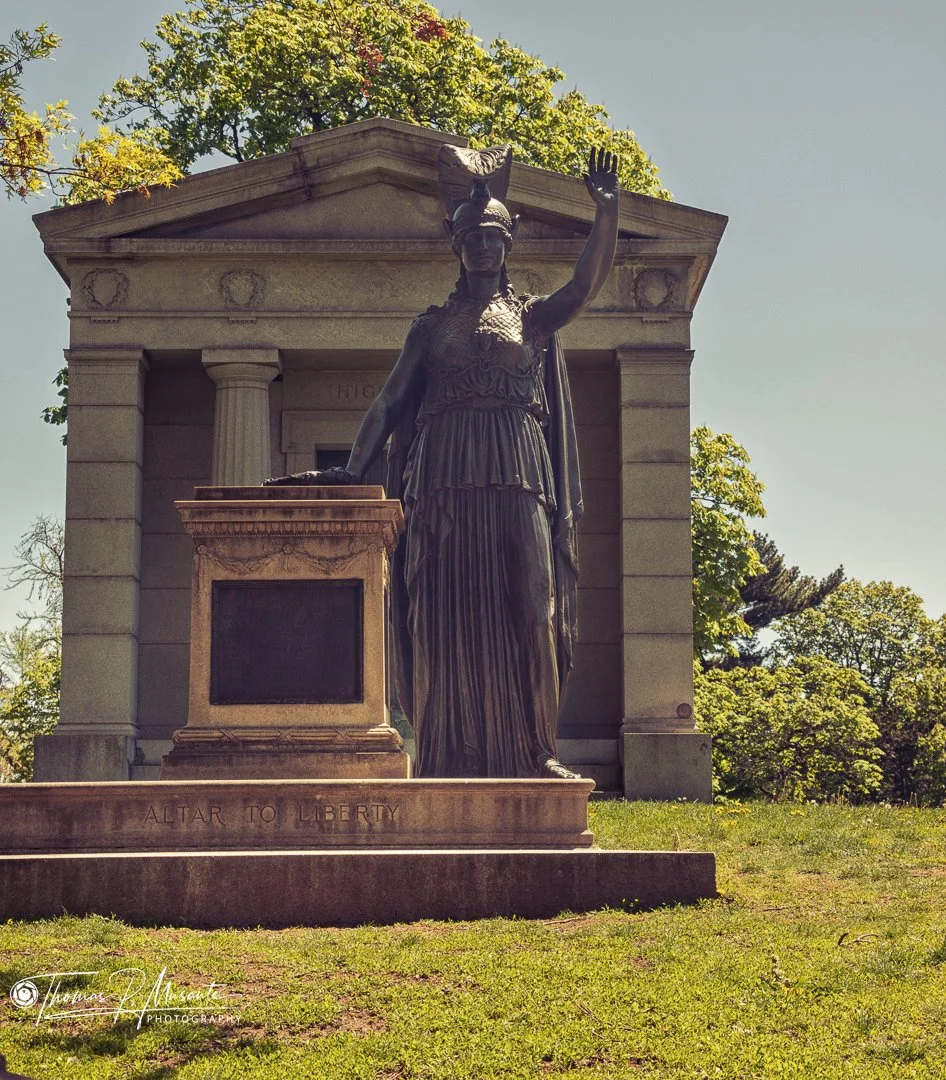
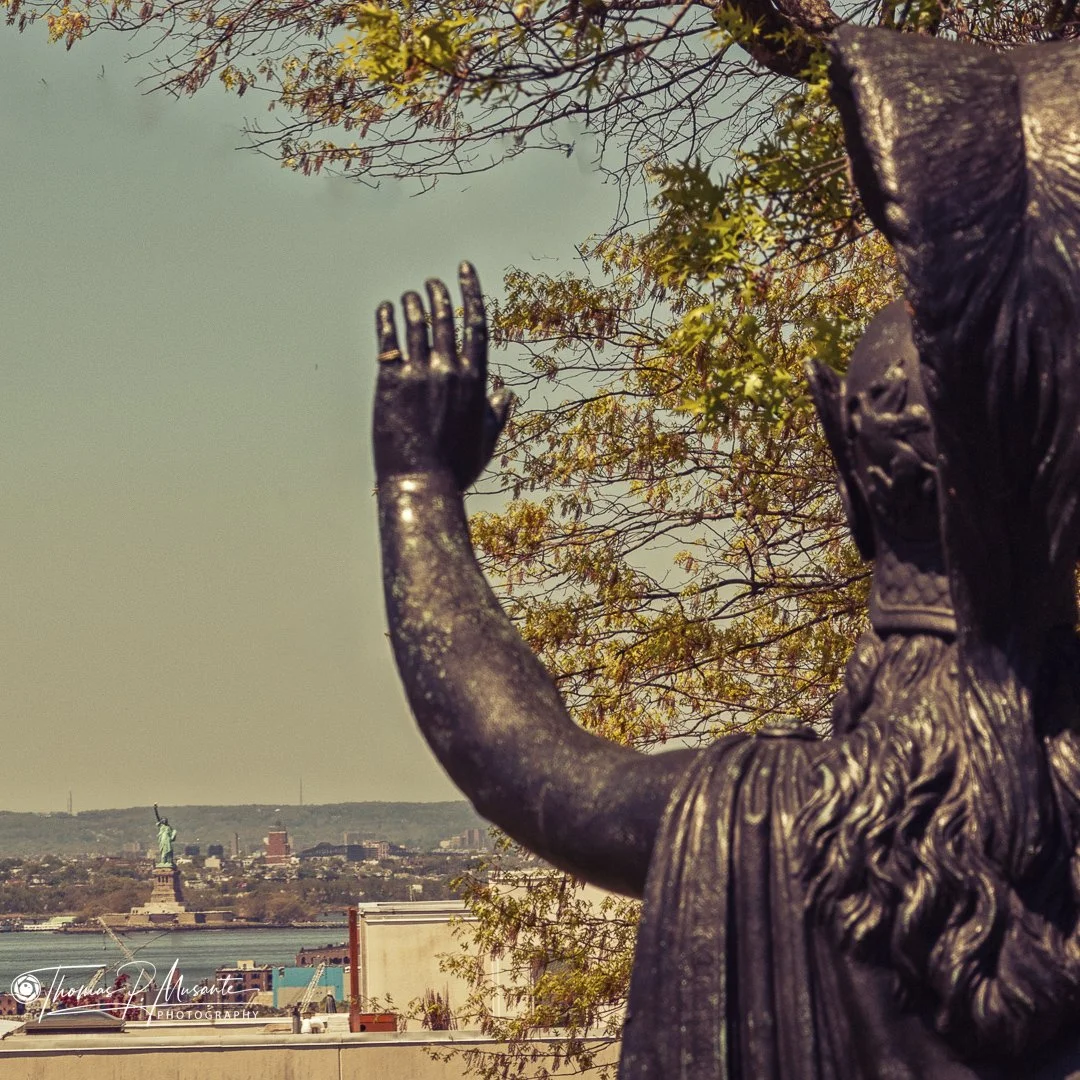
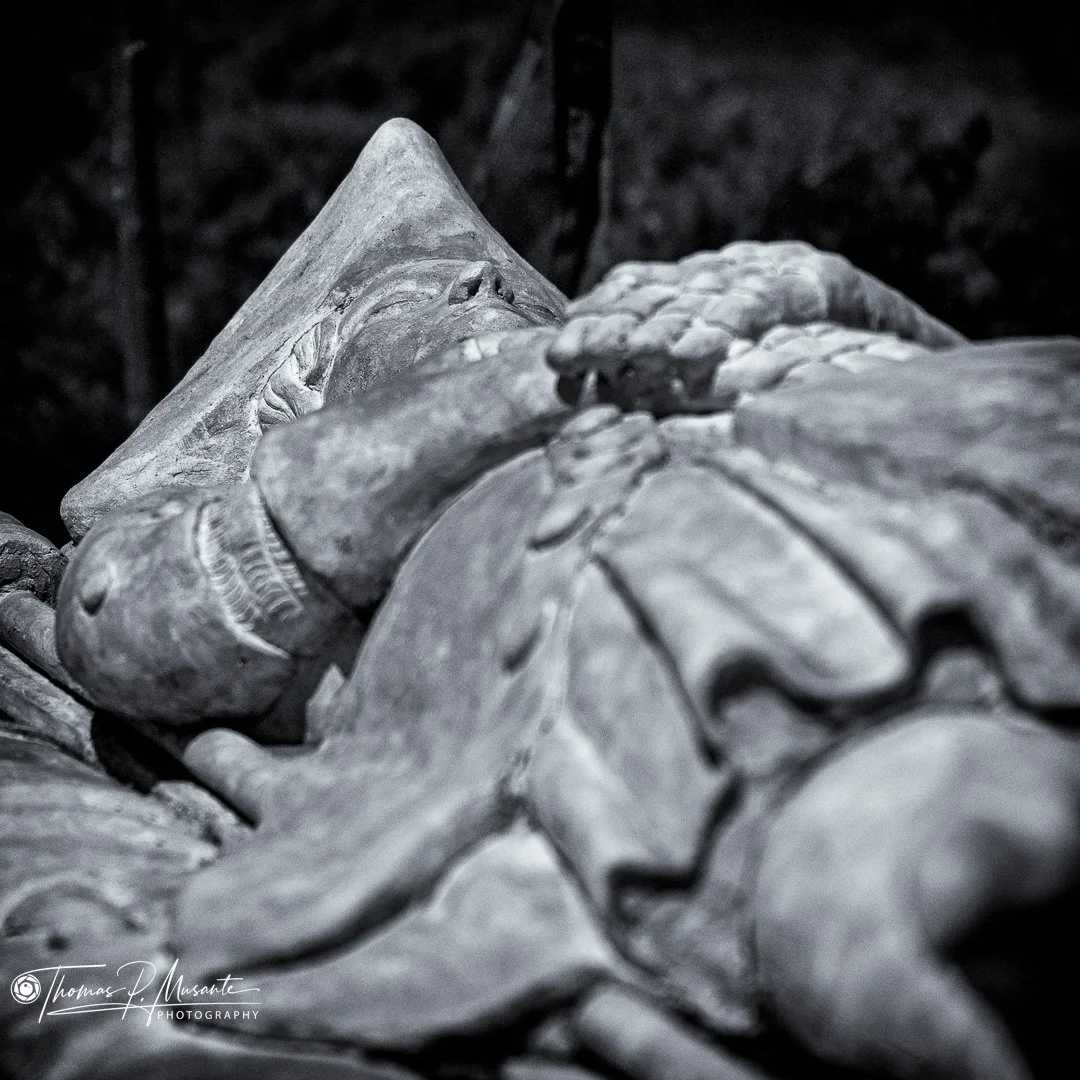
Atop Battle Hill stands the Altar to Liberty, crowned with a bronze statue of Minerva, the Roman goddess of wisdom and strategic warfare. Commissioned by Charles M. Higgins (Higgins Ink) and unveiled in 1920 on the anniversary of the battle, the monument honors the fight that took place there. Minerva raises her hand in salute toward the Statue of Liberty in New York Harbor—a connection intentionally designed by its creators so she appears to wave to her distant sister across the water. Nearby on the hill is the tomb effigy of Margaret Corbin, the woman cannoneer who stepped in to fire her husband’s cannon after he fell at the Battle of Fort Washington, earning her a soldier’s pension from Congress.
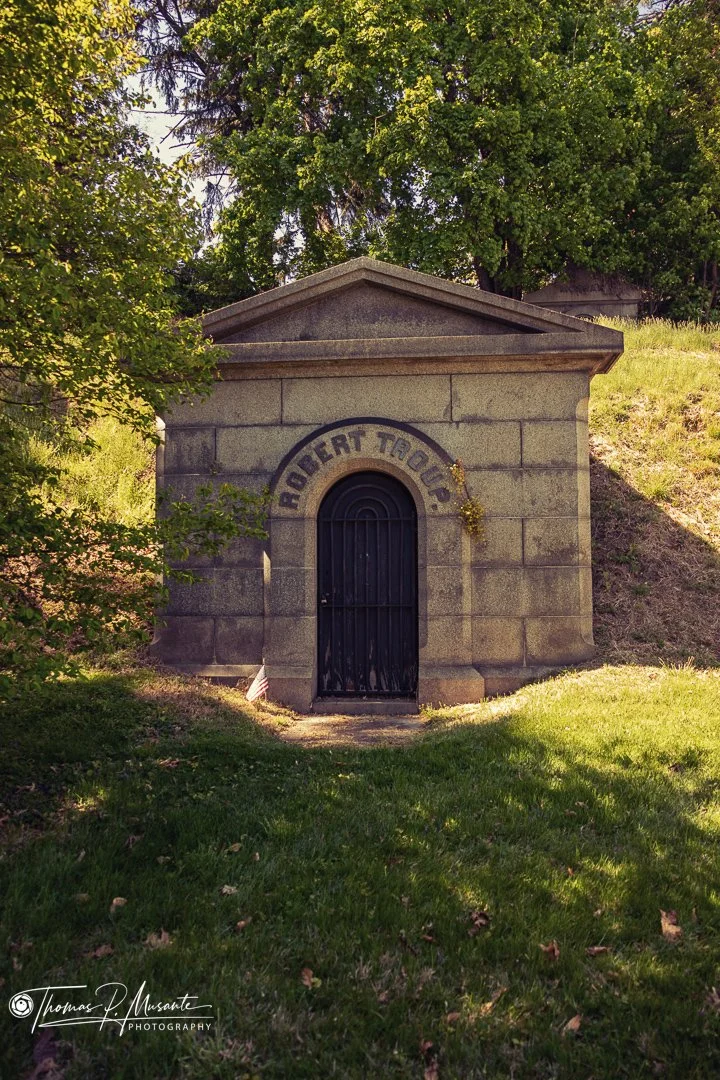
Many veterans of the Revolutionary War rest in Green-Wood Cemetery, their graves a quiet reminder of the conflict that once raged across this ground. Among them is Robert Troup, who served as a lieutenant colonel in the Continental Army, was captured by the British while guarding Jamaica Pass during the Battle of Long Island, and later became a lawyer, New York State assemblyman, and federal district judge; his remains were reinterred here in 1872. Others include Henry Rutgers, a Revolutionary War officer and philanthropist whose name lives on at Rutgers University, and Ebenezer Stevens, who took part in the Boston Tea Party and served as an artillery officer in the Continental forces—one of the few participants in that iconic protest buried in New York City.
If you liked this post, check out:
Sources
Information on Robert Troup drawn from his Wikipedia entry, Find a Grave memorial, and historical accounts
Battle of Long Island (including service under General Nathaniel Woodhull).
Additional details on the cemetery, Minerva statue, and Battle Hill from Green-Wood Cemetery’s official historical materials and contemporary records.