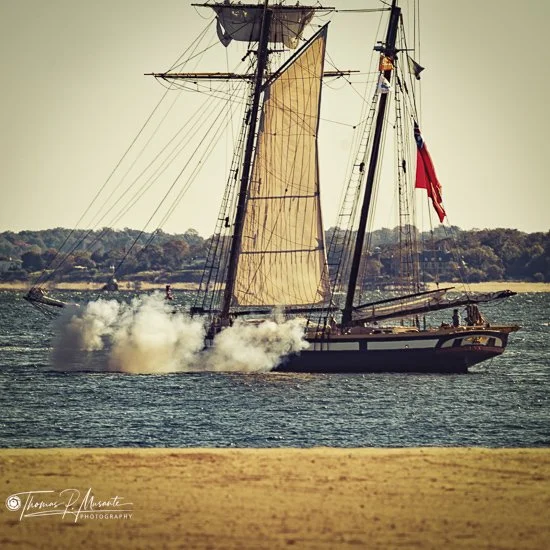
Dispatches From Pell’s Point
On October 11, 1776, Benedict Arnold hid his fleet in the narrow channel behind Valcour Island, so the British sailed past him and had to fight their way back against the wind. They fought until dark, and that night Arnold slipped through the British line in the fog. Two days later he burned the last of his ships in what is today called Arnold’s Bay, possibly the only place in the country that carries his name. After taking Crown Point late in the fighting season, the British turned back to Canada.
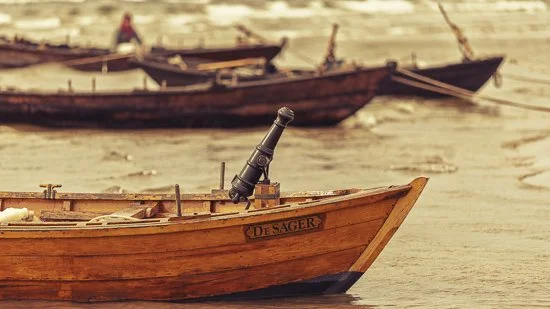
Dispatches From - Valcour Island
On October 11, 1776, Benedict Arnold hid his fleet in the narrow channel behind Valcour Island, so the British sailed past him and had to fight their way back against the wind. They fought until dark, and that night Arnold slipped through the British line in the fog. Two days later he burned the last of his ships in what is today called Arnold’s Bay, possibly the only place in the country that carries his name. After taking Crown Point late in the fighting season, the British turned back to Canada.
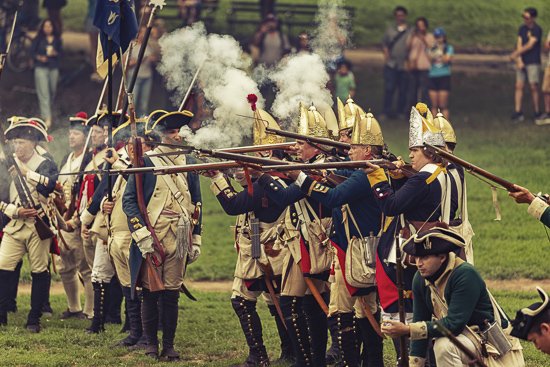
Dispatches From Brooklyn
On August 27, 1776, General William Howe marched his army around the American left in the dark and attacked at daybreak from the rear. The line broke, and a few hundred Maryland and Delaware men held at Gowanus Creek long enough for the rest to get away.
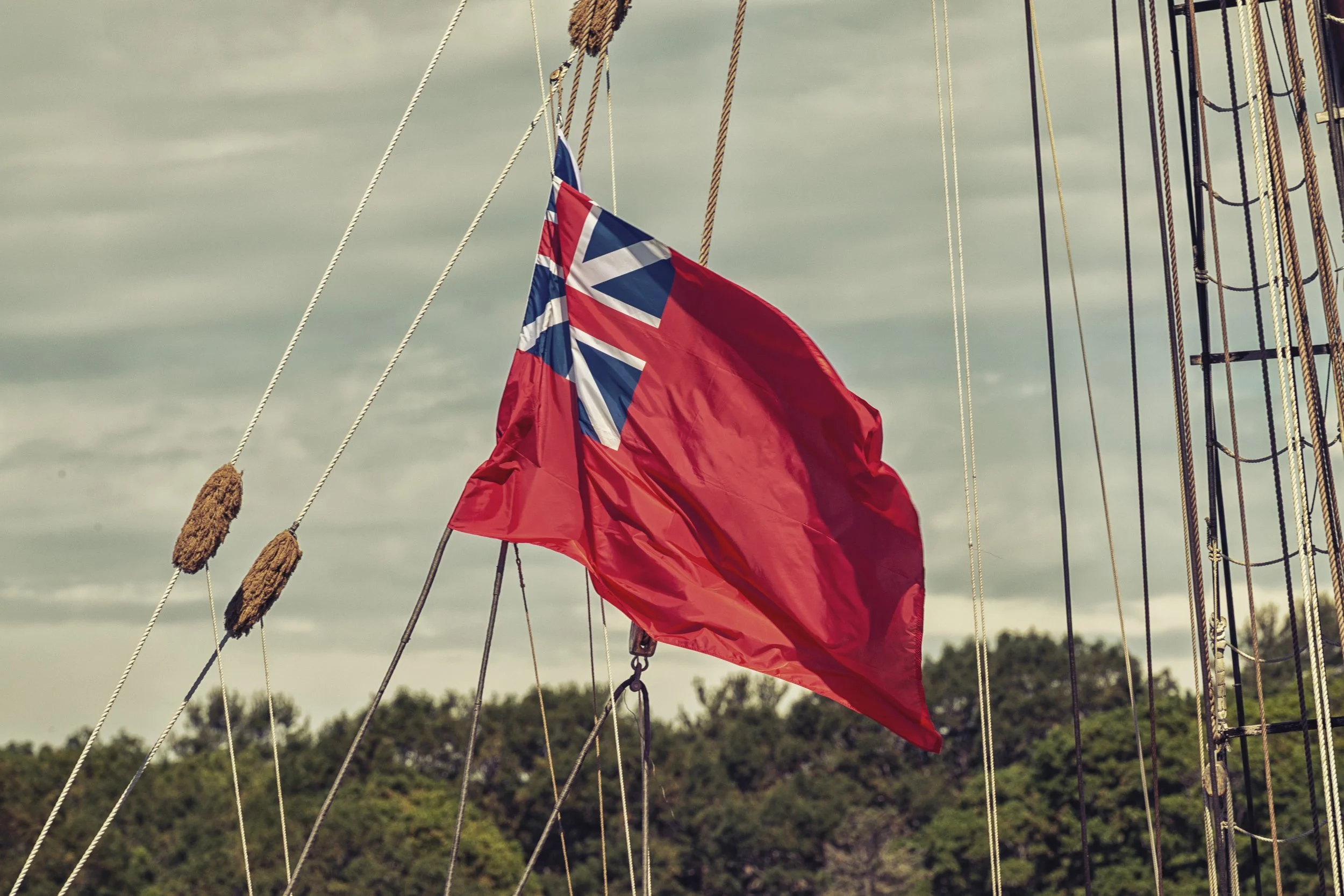
Dispatches From Gloucester
On August 8, 1775, HMS Falcon chased two schooners into Gloucester harbor. Captain John Linzee sent his boats in, the townspeople fought back, and he tried to burn the town. He failed, and lost his boarding party.

Dispatches From Lexington
How the Massachusetts Spy and a British broadside reported the Battle of Lexington — two accounts of one morning, photographed at the 2026 reenactment.

2026 The Battle of Brooklyn – Portraits
The more of these events I do the more I come to realize they all take on their own personalities regarding my images and what subjects I’m drawn to. For Brooklyn it was most definitely candid portraits and street scenes. I did capture compelling images of the battle and retreat, but in post-production I was drawn to the faces of this event. Please see my Battle of Brooklyn Gallery for the complete set of images.

Bateaux Burden: Riverine Logistics, Human Cost, and the Return of an Army at Fort Ticonderoga 2026
This past weekend at Fort Ticonderoga, I captured living history that brought the Northern Continental Army’s 1776 struggles—and echoes of the 1775 Quebec campaign—vividly to life. As part of the REAL TIME REVOLUTION® Signature Reenactment Event “Return of an Army” (July 3–5, 2026), reenactors portrayed the arrival of exhausted troops by bateaux, care for the sick amid smallpox, and the delivery of cannon to fortify defenses.

Longboats: Unsung Workhorses of the Revolutionary War
During the recent Gloucester reenactment, the sight of longboats pulling hard toward shore brought the tactics of 1775 vividly to life. Oars cutting through the water, spray flying, and the determined faces of the crews—it was a powerful reminder of how these small craft shaped coastal operations throughout the American Revolution.

4th Light Dragoons – Moylan’s Horse
At the Putnam County Heroes Battle the Redcoats event on June 6, 2026, at Veterans Memorial Park in Carmel, NY, members of the 4th Light Dragoons – Moylan’s Horse provided a striking mounted escort for George Washington. Their green uniforms created a vivid presence amid the local 250th commemoration, offering excellent opportunities to document cavalry in action during drills, formations, and escort duties.

The Galloper's Bite: Small Guns, Big Impact in 1776–77
At the recent Putnam County Heroes Battle the Redcoats event in Carmel, NY, a compact iron 3-pounder cannon from 1777 roared to life once more. Nicknamed “gallopers” or “grasshoppers” (depending on the side) for their lively recoil and nimble movement across fields, these light field pieces delivered outsized punch in the fluid, hard-fought battles of the American Revolution.

The 1776 Confiscation of Johnson Hall
On May 16–17, 1776, the 3rd New Jersey Regiment (“Jersey Greys”) under Col. Elias Dayton marched into Johnstown and seized Johnson Hall. They arrested Lady Mary Johnson and other suspected Loyalists.

BLOODY AMBUSH AT PINES BRIDGE: HEROES SLAUGHTERED IN WESTCHESTER
Dawn turned deadly when a pack of Tory “Cowboys” from De Lancey’s New York Volunteers slammed into the Continental outpost at Pines Bridge on the Croton River.