Sewing, Tailoring, and the Everyday Fight for Independence
Colonial tailor - Looking Over His Shoulder, Fort Ticonderoga “Return of an Army” July 2026, © Thomas Musante Photography
A reenactor sits quietly bent over his work, needle moving in short, practiced strokes through a half-finished linen shirt. No one's watching. No musket fire, no drums, no crowd — just the quiet, repetitive work that a soldier's survival actually depended on. It's an unglamorous scene, and that's exactly why it matters. Long before a man ever shouldered a musket, someone had already spun, woven, and stitched the shirt on his back. In 1775, that work was as political as it was practical.
Boycotts and the Rise of Homespun
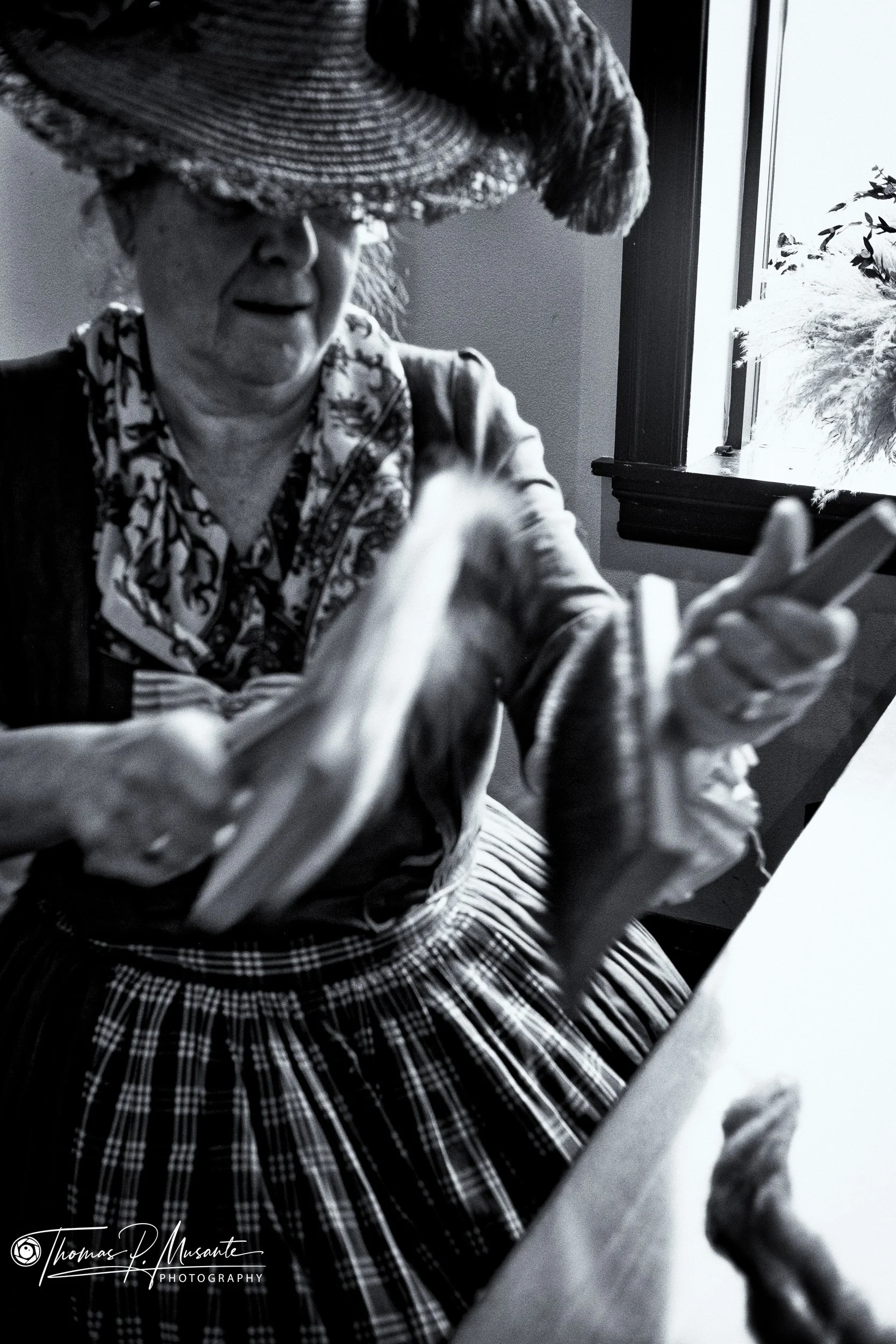
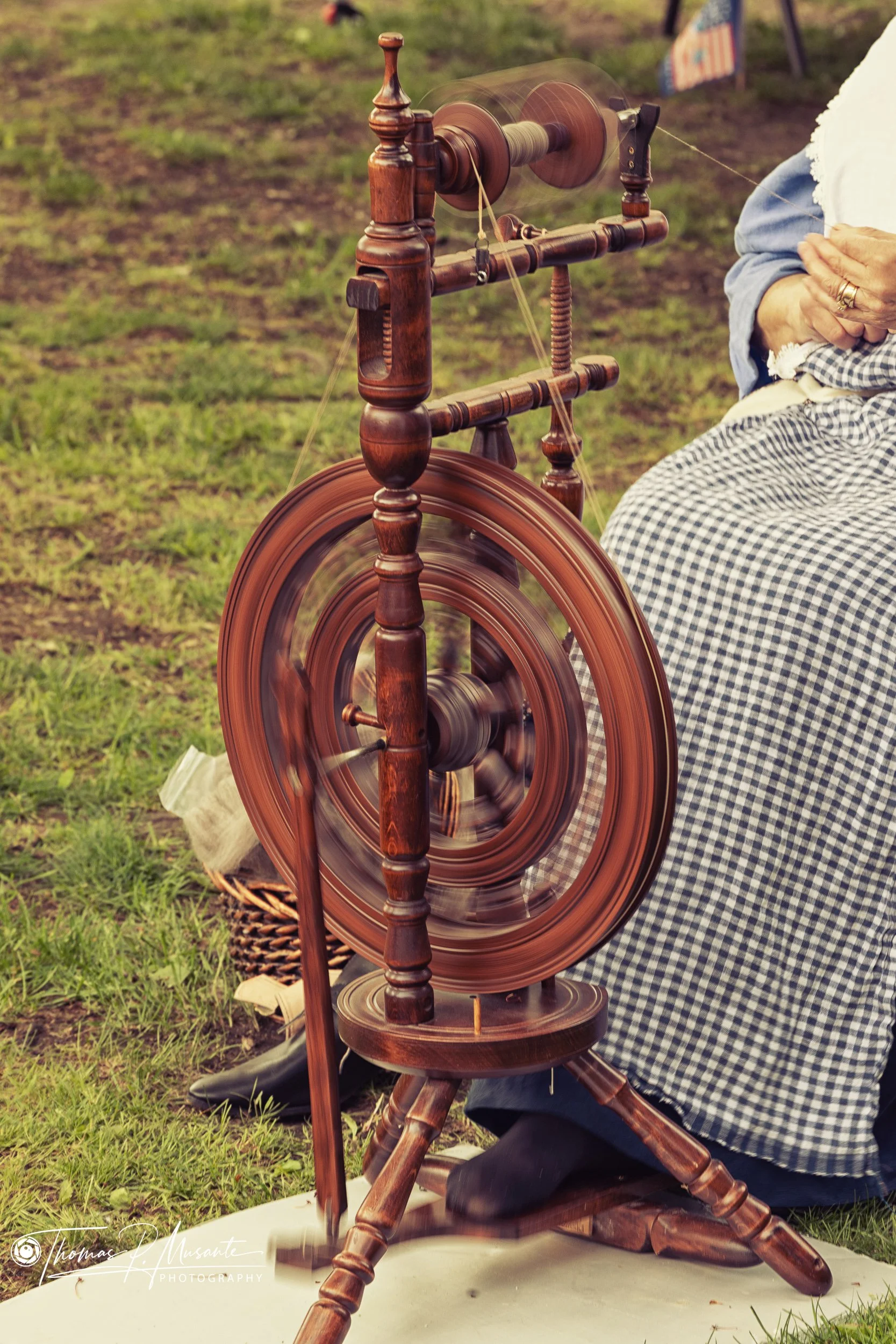
In the decade before Lexington and Concord, colonists turned their closets into a battlefield. British taxes, from the Stamp Act (1765) through the Townshend Acts (1767), fueled colonial boycotts that made refusing English cloth a form of protest. Refusing imported cloth allowed ordinary families, especially women, to resist without picking up a weapon. Homespun, laboriously produced from local flax, wool, and hemp, became a badge of political loyalty. Wearing it publicly was a visible, everyday declaration of where you stood.
The Spinning Bee as Political Theater
Household necessity soon evolved into public spectacle. Ministers called on women to gather for spinning and weaving competitions — whose town could produce the most cloth, the finest thread, the sturdiest weave? Newspapers reported the results like sporting news, hailing the "ladies of Boston" or "ladies of New York" as colonial patriots. These were not solitary chores but communal, competitive events: spinning wheels humming late into the night while neighbors shared songs, stories, and news. For women largely excluded from formal politics, the spinning bee offered a powerful stage.
Tailors, Shortages, and Constant Improvisation
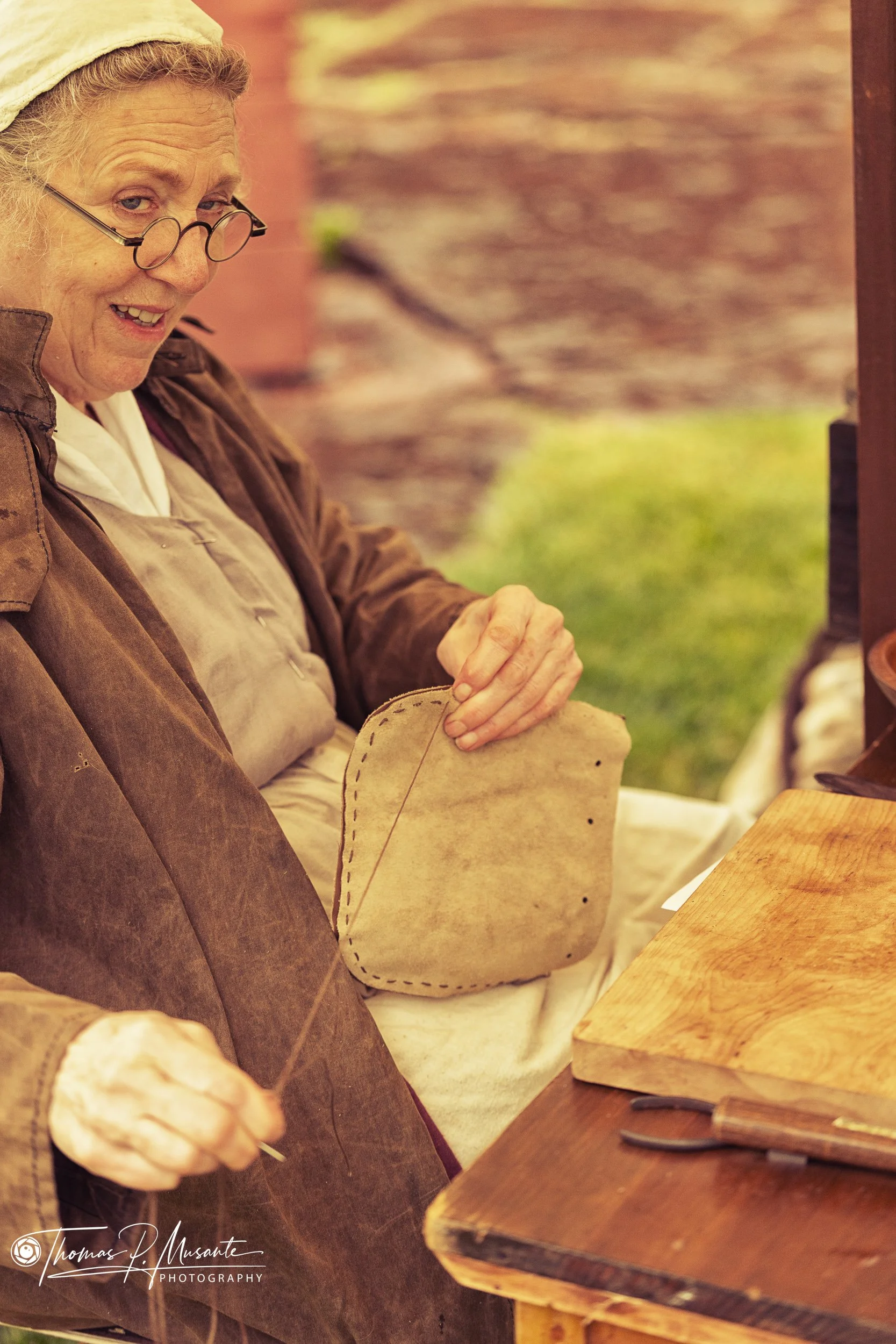
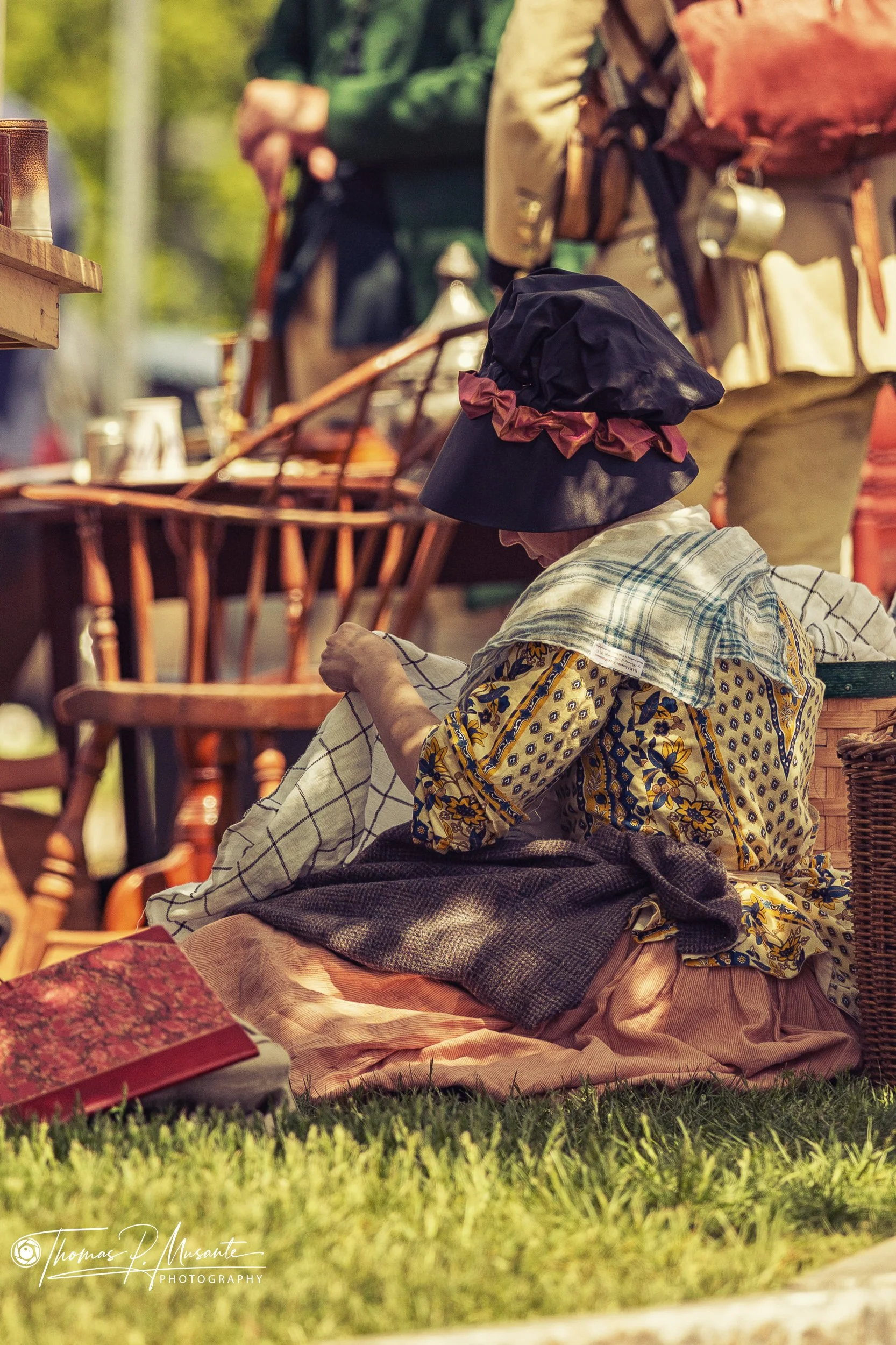
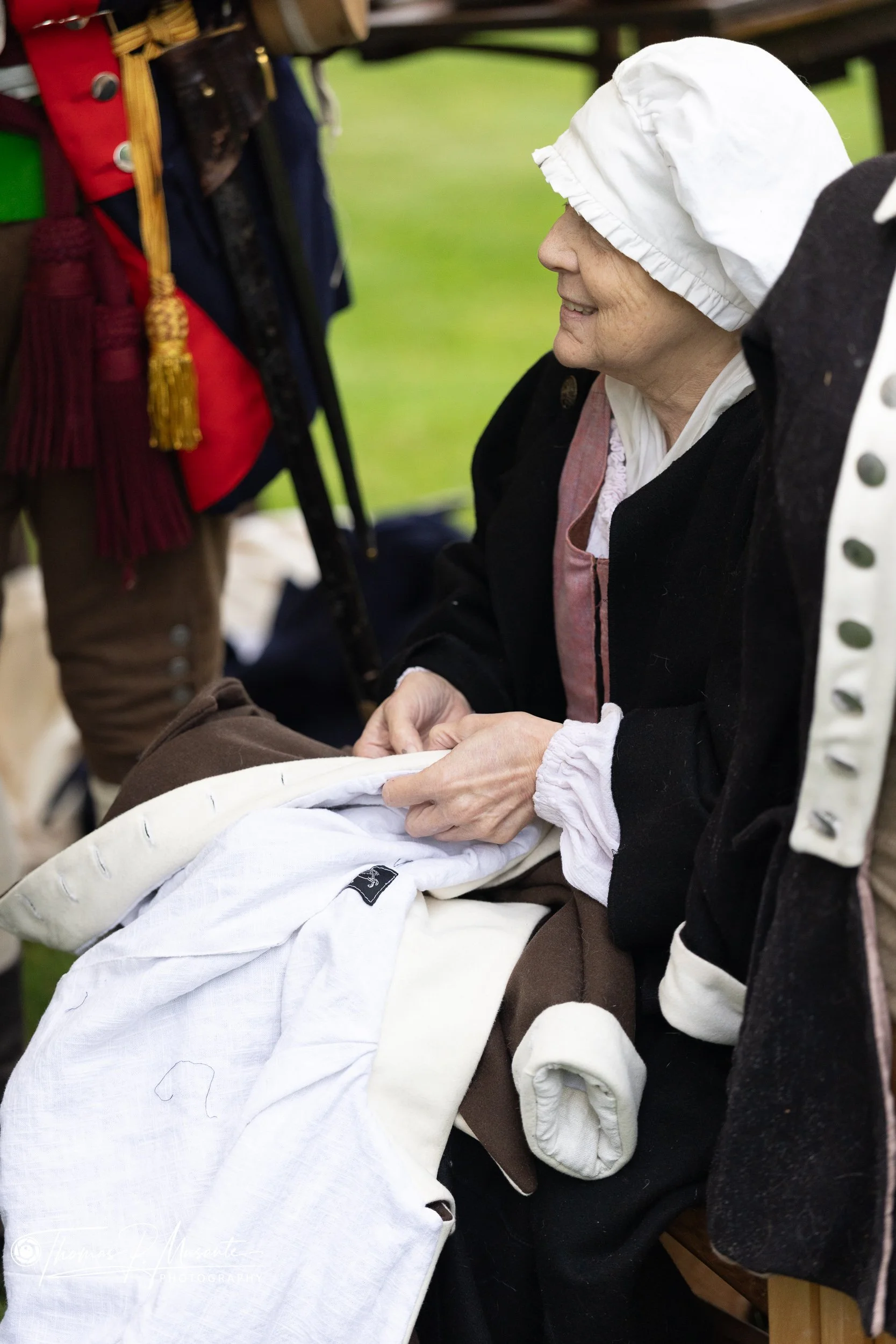
Behind the spectacle lay harder, less visible labor. Professional tailors adapted patterns as materials grew scarce. Rural families mended relentlessly — a torn coat patched a dozen times rather than replaced. Nothing was wasted; garments were reworked, resized, and handed down. This quiet ingenuity sustained daily life but rarely made dramatic photographs. Yet it defined survival during the Revolution.
Even So, the Army Went Ragged
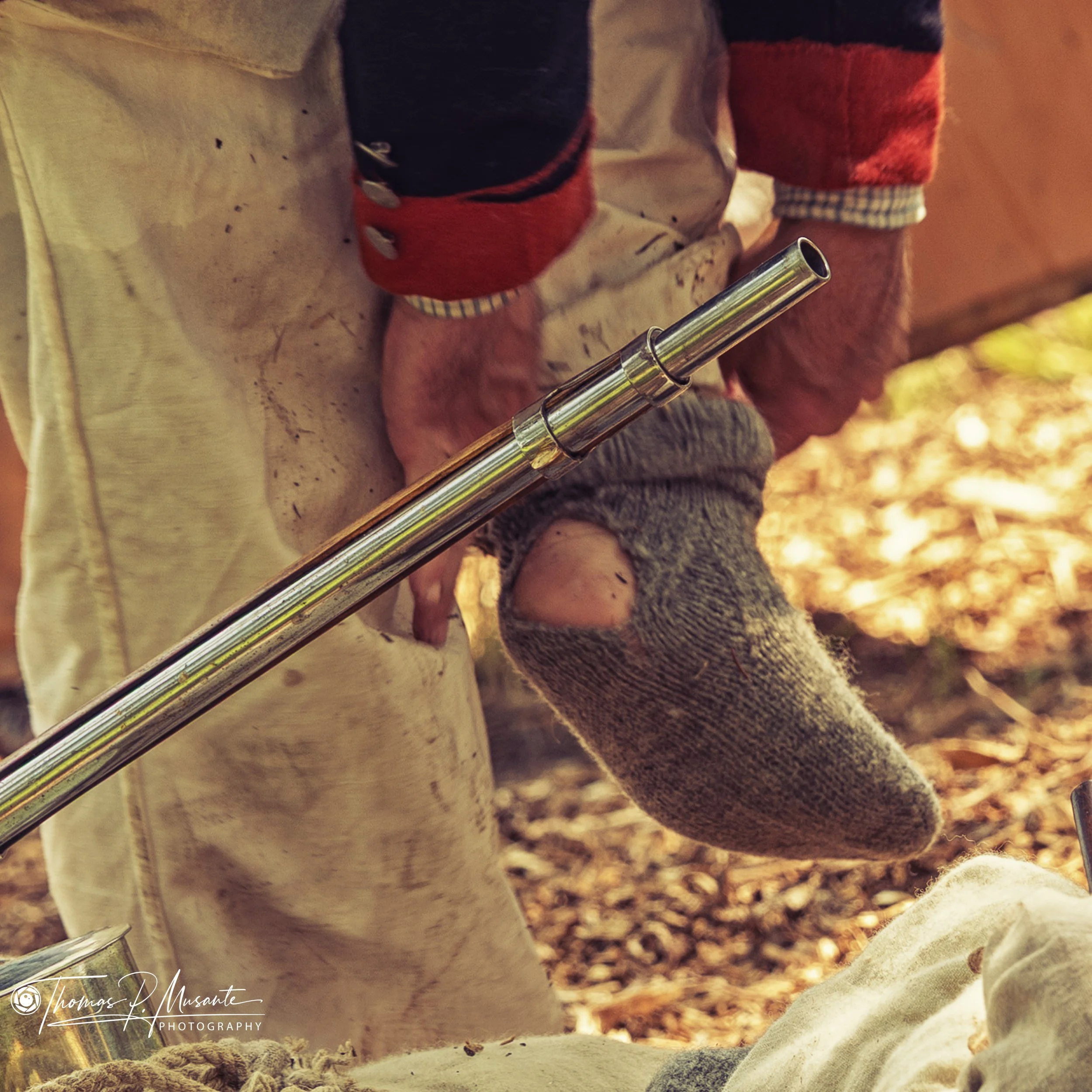
For all the civilian effort, the Continental Army remained chronically ragged. Soldiers marched without shoes, wrapping rags around their feet in winter. Uniforms were inconsistent at best — mismatched coats, hunting shirts standing in for regulation issue, blankets serving as cloaks. Supply chains failed repeatedly; contractors under-delivered; states and Continental authorities argued over responsibility. Valley Forge stands as the famous example, but shortages were the rule, not the exception, across most of the war. Homespun efforts and sewing circles helped, but they never fully solved the problem. That honest tension — enormous grassroots labor meeting persistent, grinding shortfall — reveals more about the Revolution's reality than any tidier tale.
Why Reenactors Still Sew
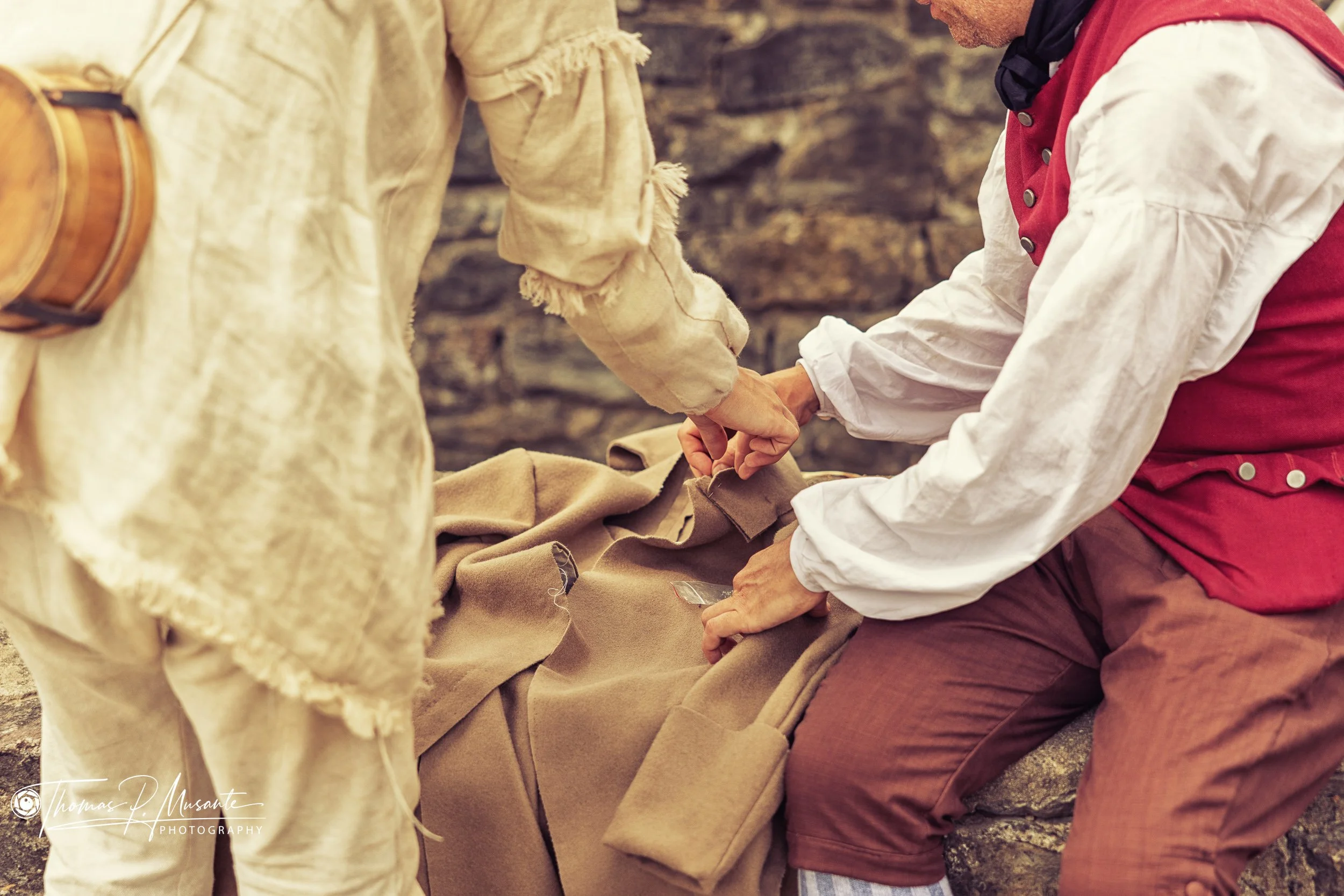
Talk to enough reenactors and you'll notice something: almost none of them think of their clothing as a costume. A hunting shirt or a wool jacket is closer to a tool, and like any tool, it has to be understood, not just worn. That's what was happening on a stone wall at Fort Ticonderoga over the Fourth of July weekend, where two reenactors stood bent over a half-finished coat, working through a specific, practical problem: wetting the wool and stretching it to shape a better fit. It's an old tailor's technique and watching it debated in real time — how much water, how much stretch, where the fabric needs to give — makes clear this isn't guesswork or performance. It's a craft skill, passed hand to hand the way it would have been two and a half centuries ago, refined through trial and error rather than pulled from a book. Many reenactors spend months on a single kit this way — researching period cuts and stitching methods, sourcing the right weight of wool or linen, hand-sewing seams a machine could finish in minutes, because the hand stitch (and the fit) is part of what makes the garment true to 1775. It's not incidental to the reenacting. For a lot of them, it's the part that teaches the most: you don't really understand what a soldier's coat cost to make and maintain until you've stood over one at Ticonderoga, working out the fit with someone else.
What This Looks Like Through the Lens
These are the moments that reward patient street photography. Across 2026 shoots — from pre-dawn musters at Lexington to encampments at Fort Ticonderoga — the same scenes repeat in different uniforms: a reenactor threading a needle by firelight, mending a cuff, or adjusting a hand-sewn hunting shirt before crowds arrive. Sometimes solitary and focused; sometimes shared, with knowledge passed hand-to-hand as it was 250 years ago.
Reenactors sewing coats at a Saturday encampment aren't romanticizing the hardship. Doing the work by hand, even briefly, deepens their respect for how grueling it truly was. That respect — raw, unpolished, and deeply human — is exactly what this Rev 250 Street Photography Project aims to document.
If you liked this post, check out:
Sources:
Ken Burns, Sarah Botstein, and David Schmidt, The American Revolution, PBS documentary series, 2025 (Episode 1, "In Order to Be Free") — spinning bee competitions and press coverage of the "Daughters of Liberty"
Laurel Thatcher Ulrich, The Age of Homespun: Objects and Stories in the Creation of an American Myth (Vintage Books, 2001)
Museum of the American Revolution — "Age of Homespun" (online collection essay)
New-York Historical Society, Women & the American Story — "Spinning Wheels, Spinning Bees" (primary source unit)
U.S. National Park Service — "Anger and Opposition to the Stamp Act," and Valley Forge park materials on Continental Army supply shortages
Britannica — "Stamp Act" and "Townshend Acts" (reference entries, used to confirm dates and taxed goods)
On-site observation and conversation with reenactors, Fort Ticonderoga, July 2–5, 2026 (wool-shaping technique, kit construction)
All images © 2026 Tom Musante, tmusantephotography.com. Part of the Rev 250 fine-art street photography project documenting the 250th anniversary of the American Revolution.