From Copper to Confinement Rev250 — Old New-Gate Prison & Copper Mine, East Granby, CT
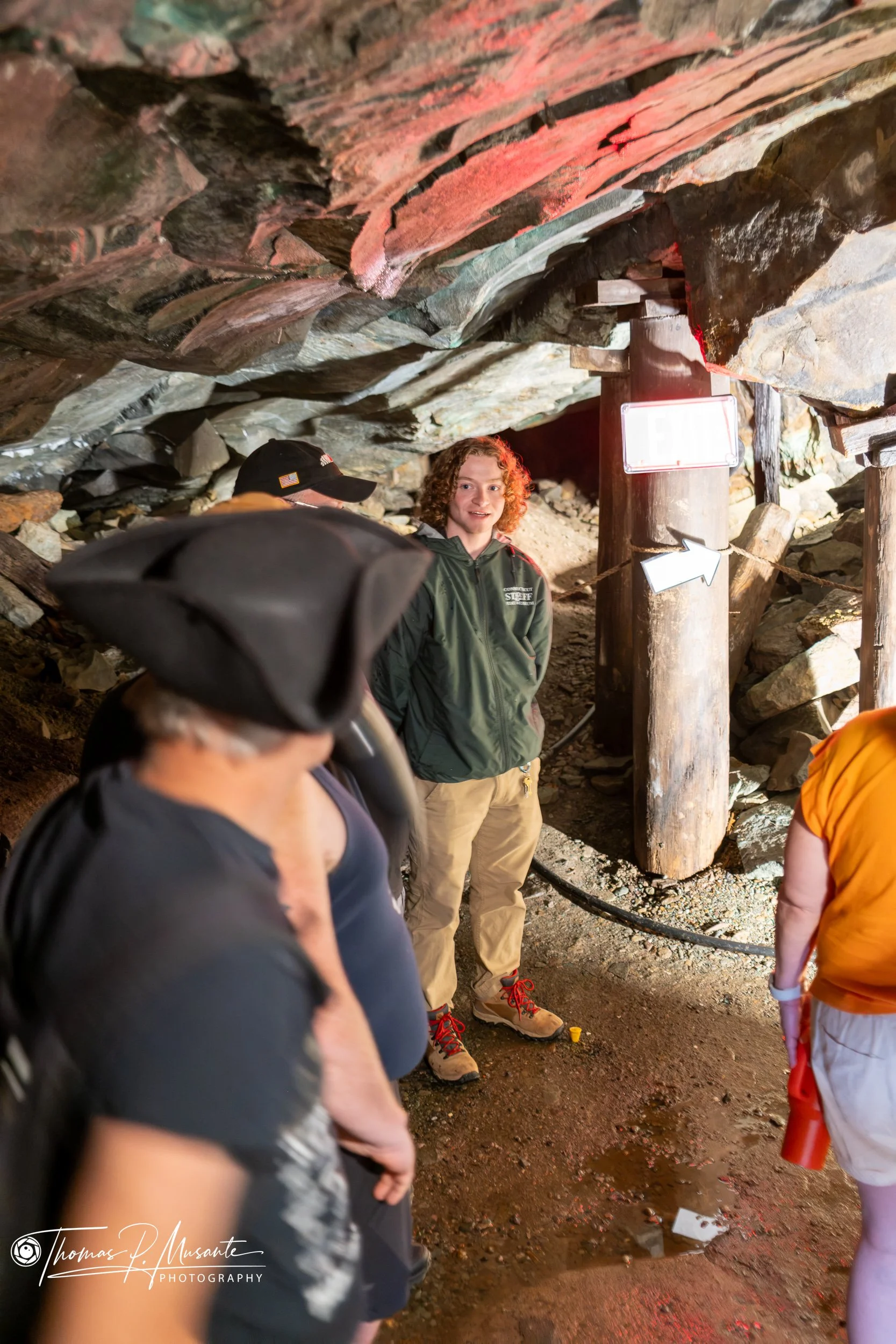
A docent talks to a group of visitors deep in the Old New-Gate Copper Mine
July 25th 2026
See the companion gallery Rev250 Old New-Gate Prison
The tunnels don't look like a prison. Descend the concrete stairs into Old New-Gate and the first thing that hits you is the smell of wet stone, then chill, damp air — in earlier days a single lantern beam would have caught the seam of blue-green copper ore in the rock, the rest swallowed in dark. The copper's long gone; today's electric light offers only slightly better visibility as a docent's voice echoes ahead, leading a knot of visitors past a rope line and a timber support post toward the next chamber. It's easy, standing there, to forget you're underground for a reason that has nothing to do with punishment. This was a mine first. The prison came later, and it came because the mine was already here.
A Mine Before It Was a Prison
Standing in that first chamber on July 25, body braced against a cold metal guide rail to steady the camera in low light, it was hard not to think about the men who were lowered into these same shafts two hundred fifty years ago. The tunnels at New-Gate were cut in the early 1700s, when the site operated as the Simsbury Copper Mines — one of the first chartered copper-mining operations in colonial America. The ore never quite made the mine profitable; the veins were thin and the labor of hauling copper up from underground shafts was brutal. By the 1770s the mine had largely gone quiet, leaving behind exactly what a fledgling colony at war needed: a set of secure, nearly escape-proof caverns cut into solid rock.


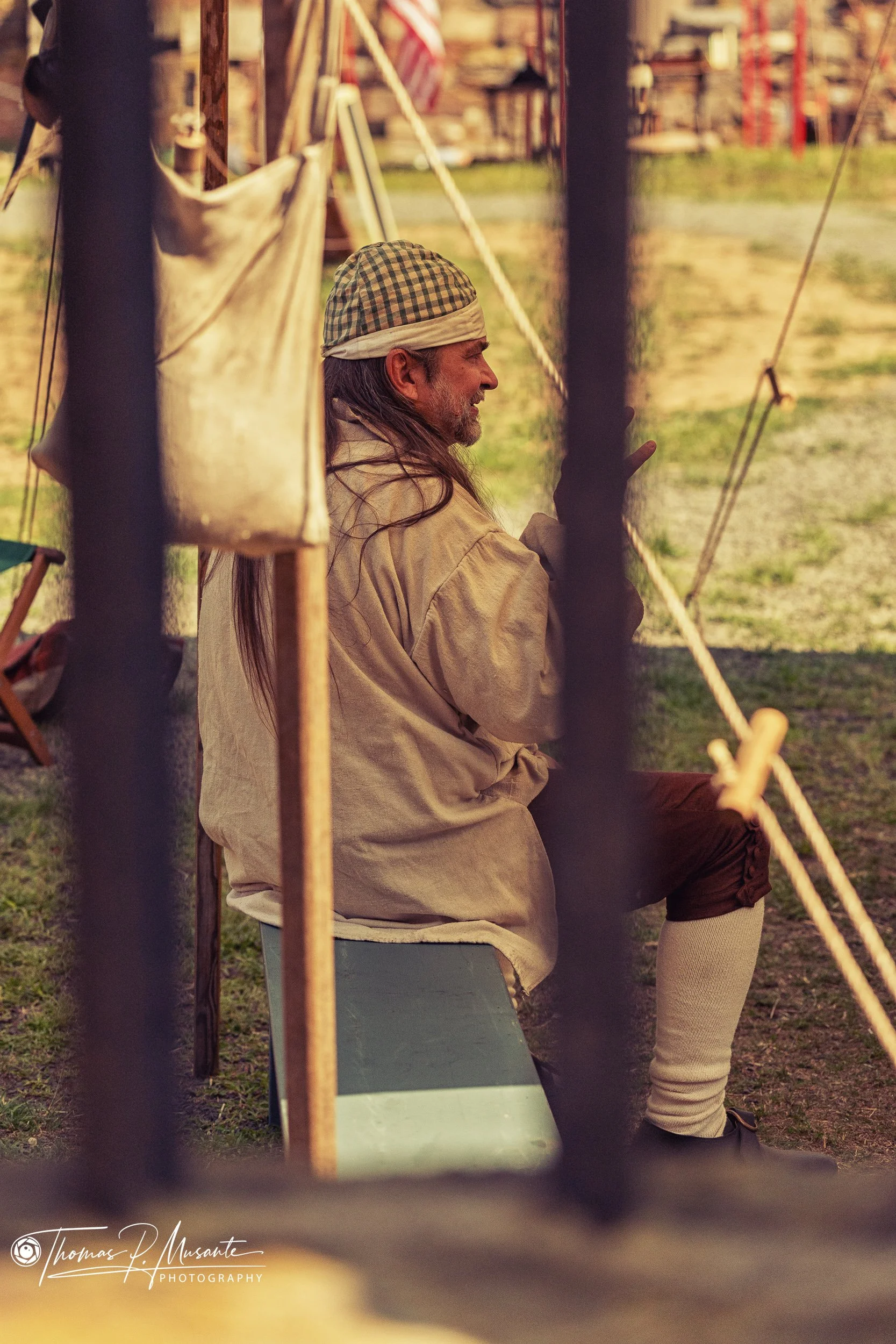
In 1773, Connecticut converted the abandoned mine into New-Gate Prison — the first state prison in America. Inmates were lowered into the same shafts the miners had dug, sleeping on straw in caverns lit only by candlelight. During the Revolutionary War, New-Gate held Loyalists alongside the colony's criminal population — including men Washington himself ordered sent from his Cambridge headquarters during the Siege of Boston in December 1775, writing that they were 'flagrant and atrocious villains' too dangerous to keep near his camp. They were deliberately denied prisoner-of-war status, so they couldn't be pardoned or exchanged.
The damp, cold, airless conditions that had made the site unworkable as a mine made it, by the era's standards, an effective prison — which is its own kind of dark irony. What was too harsh an environment to make a living in became harsh enough to keep men from leaving.
A Museum Today
Today New-Gate is a National Historic Landmark, preserved by the State of Connecticut as both a historic site and an active archaeological preserve. It's also a member of the Association of Carceral Sites and Museums, a network of historic sites — including Alcatraz and Sing Sing — dedicated to preserving and interpreting the history of American incarceration (link below).
A Photographer's Backdrop
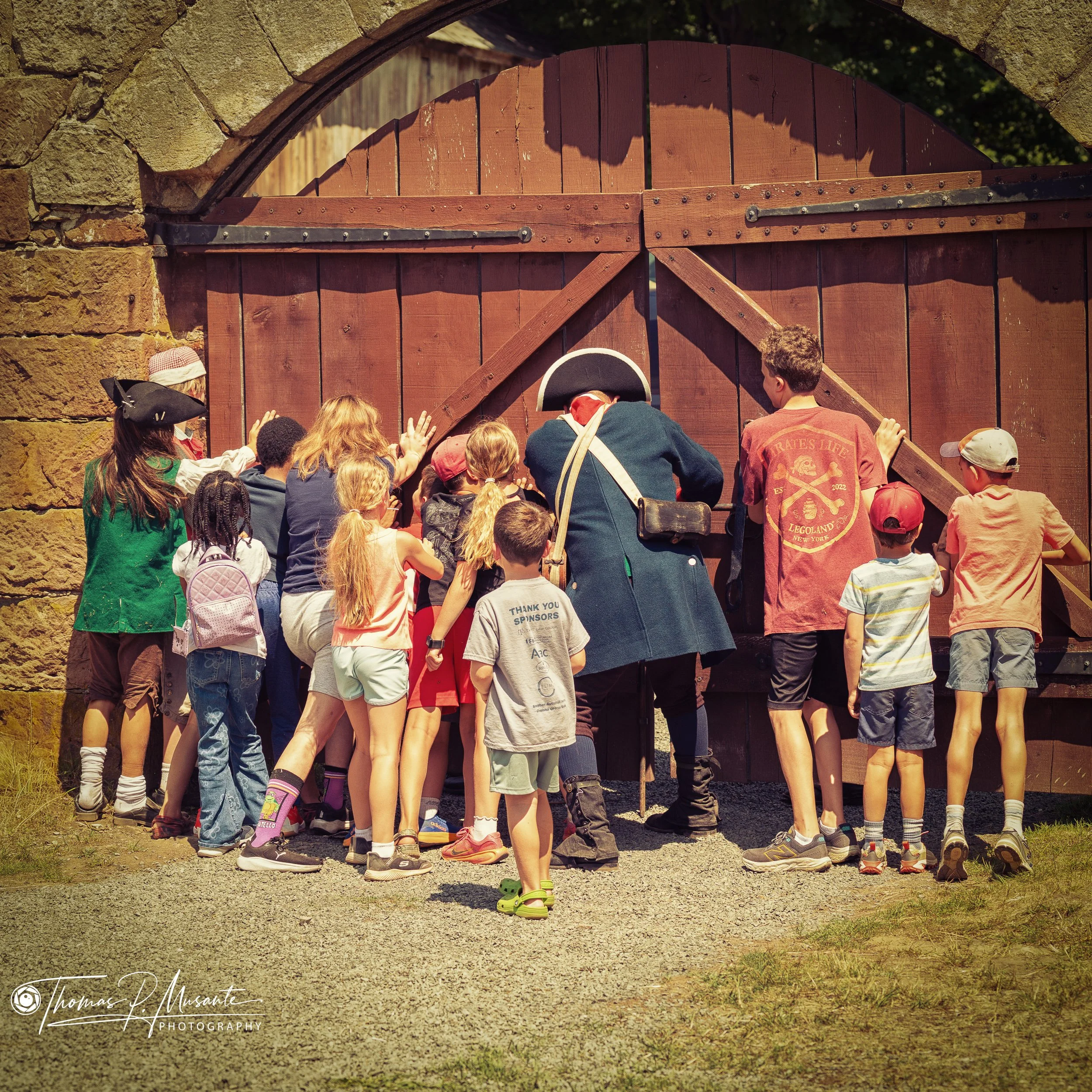
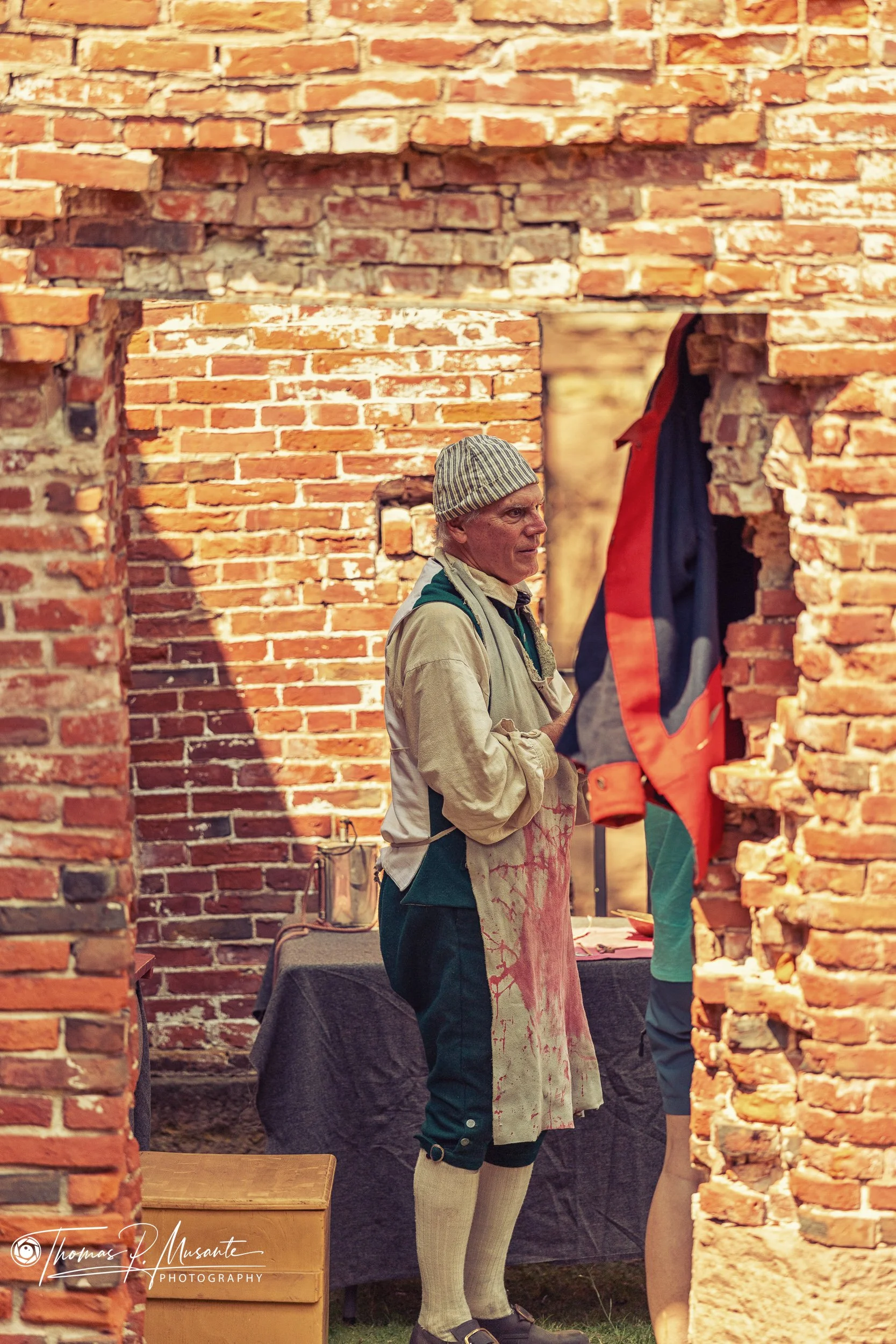

For a Rev250 shoot, New-Gate is hard to beat. The brick ruins, the arched wooden gate, the mine shafts themselves — every corner offers a different texture and a different quality of light, from hard shadows in the open courtyard to the dim electric light glow deep underground. By mid-afternoon the July sun was raking straight across the brick ruin walls, throwing every crack and weathered edge into relief — a surgeon's makeshift table framed in a doorway that's been standing since before the Revolution. Out at the gate, kids in shorts and sneakers were leaning their weight into the arched wooden frame, helping the reenactor hold back the British — that kind of continuity, two centuries collapsing into one shot, is exactly what a Rev250 image is supposed to find. Add living history reenactors in period dress moving through it, and the site does as much of the storytelling as the event itself. Few venues on this year's Rev250 schedule offer this much visual range in one place.
That's what makes New-Gate worth a Rev250 visit beyond the reenactment weekend — a mine that became a prison, and a prison that's become one of the most photogenic historic sites in the state.
If you liked this post, check out:
Sources
Association of Carceral Sites and Museums (carceral.org, carceral.org/members)
Connecticut Department of Economic and Community Development, Old New-Gate Prison & Copper Mine site materials
"Simsbury Mine – American Revolution's First National Prison," Revolutionary War Journal (revolutionarywarjournal.com), including Washington's December 7, 1775 letter to the Committee of Simsbury
Wikipedia, "Old New-Gate Prison"
Event background and program details supplied by Tom Musante Photography, Rev250, July 25, 2026
All images © 2026 Tom Musante, tmusantephotography.com. Part of the Rev250 fine-art street photography project documenting the 250th anniversary of the American Revolution.