Where the Story Begins — Redcoats and Rebels at Old Sturbridge Village
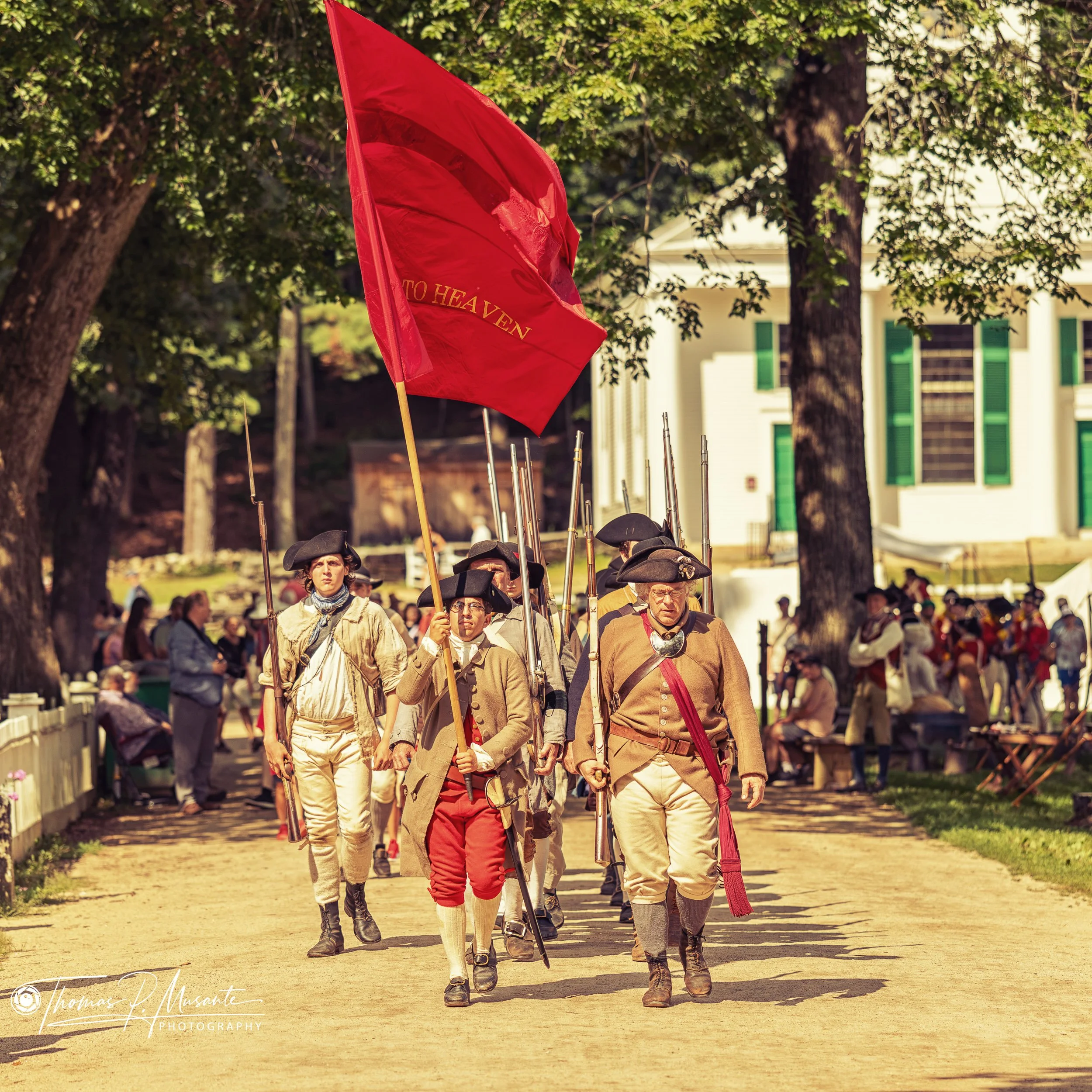
Continental troops march up the common past the meetinghouse behind an Appeal to Heaven flag, Redcoats and Rebels, Old Sturbridge Village, Rev250 living history photography by Thomas Musante.
Note: Old Sturbridge Village interprets rural New England life from 1790 to 1840. Redcoats and Rebels commemorates a war that ended before that window opens, and falls outside the 1775–76 anniversary year this project otherwise follows.
Continental soldiers marched past the 1830s town meeting house on Sunday morning, and nothing about it looked out of place. I spent most of the weekend assuming that was a happy accident. It isn't.
A Village Built for a Different Century
The Village interprets the years 1790 to 1840, and its living history program is built around the 1830s. This is a world on the cusp of the industrial revolution, a rural economy tilting toward industry — a world that arrived a full half-century after Lexington Green. The museum opened in 1946 and now covers more than two hundred acres, with roughly forty antique buildings relocated from towns across New England and upstate New York, three water-powered mills, and a working farm.
Nothing about that description is Revolutionary. The men who fought at Concord would have been old men here, if they were alive at all.
The Trades Are the Real Subject

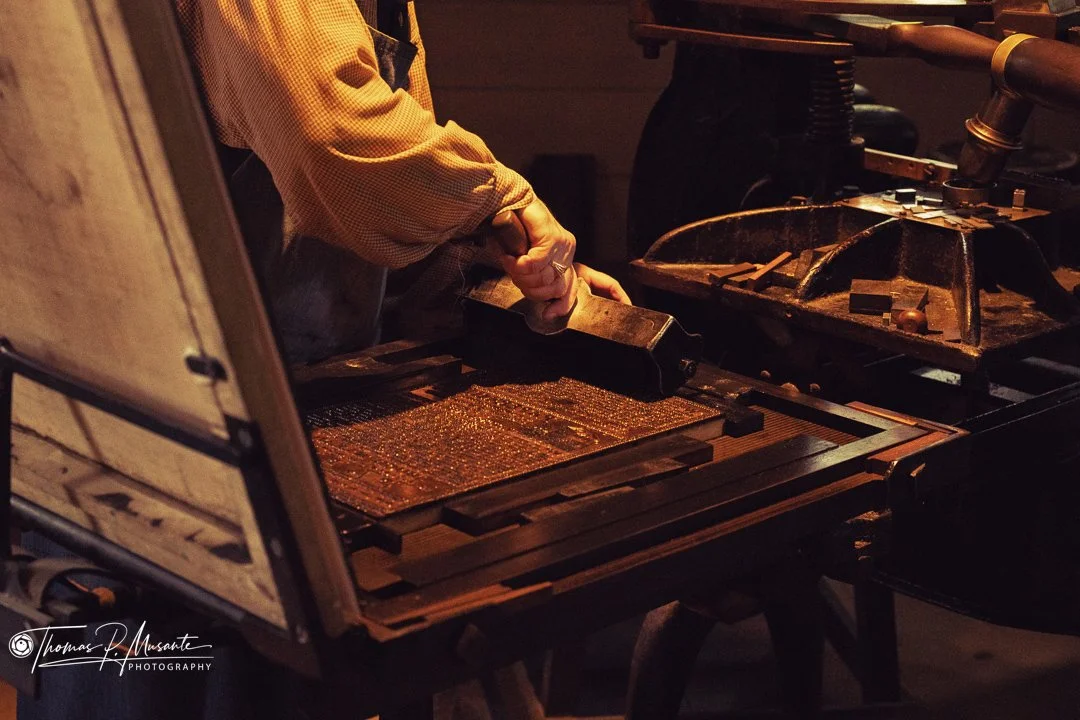
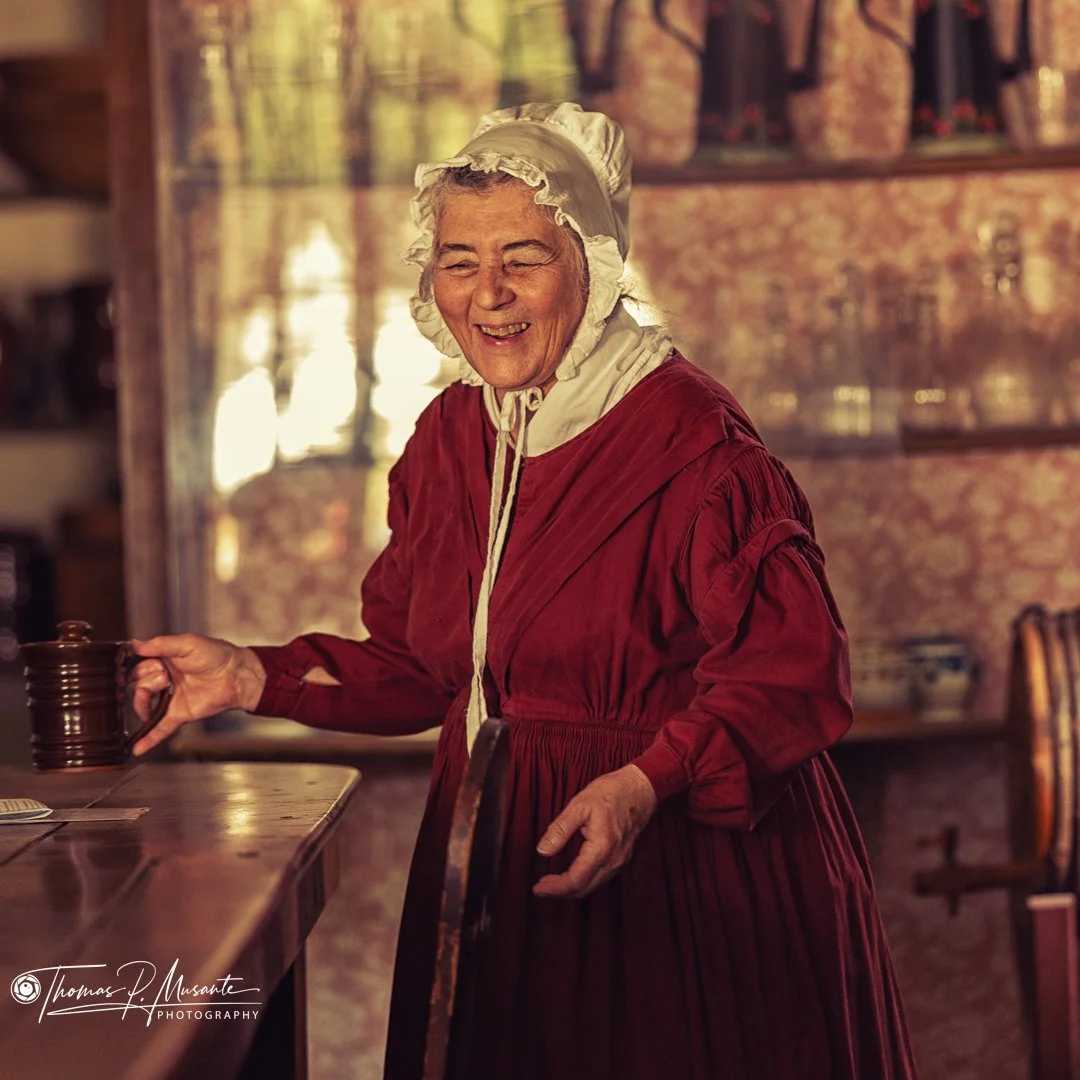
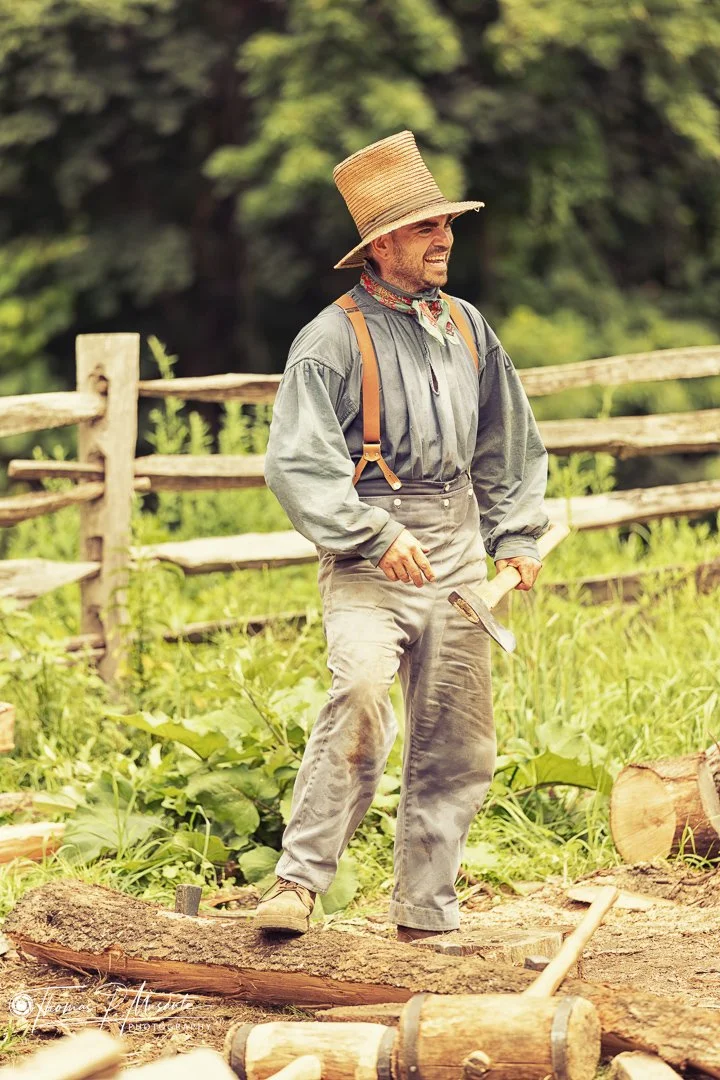
Spend time with the potter, the printer, or the storekeeper and you understand what this place is actually about. Not events. Not battles. The ordinary, daily work of people getting on with their lives.
The potter works at a wheel with clay that behaves the way clay has always behaved. The printer sets type by hand, one letter at a time, and the pace of it explains more about the circulation of news in 1830 than any placard could. The railsplitter swings his axe day after day, turning logs into the fencing farmers and townspeople needed to keep livestock where it belonged. The storekeeper stands behind a counter stocked with the specific goods a farming family would actually have bought, which is its own kind of argument about what mattered.
Today these things are taken for granted. In the 1830s they were essential.
These are the frames I keep going back to. They are quiet, and nobody is performing for the camera, and they are doing exactly what this project exists to find.
So I Asked
Why would a museum built for the early republic give one of its biggest weekends of the year to a war that ended before its story starts?
I had my guesses. The economics of a wildly popular event are certainly a factor, and so is the spectacle — cannon smoke and drums draw crowds that a potter's wheel does not. But my sense was that there were deeper reasons as well, and rather than keep guessing I put the question to the Village.
Angela Giovanello, who handles public relations for Old Sturbridge Village, answered it better than I could ever have:
"As for why we hold an event dedicated to the Revolutionary War, people often think the Revolution ended in 1783, but for the people's experiences we interpret at Old Sturbridge Village, that's really where the story begins. The farmers, shopkeepers, artisans, and tradespeople who lived here in the 1790s through the 1830s were the first generation to build lives in the new United States. We are connecting visitors to both the fight for independence and the people who lived with its impact every day."
Which turns my whole reading inside out. I had been treating the Village's period as a place the Revolution had already left. It is the opposite. The potter and the printer and the railsplitter are not filling time between the events that get remembered — they are the event, continued. They are what the fighting was for. Somebody won a country and then somebody had to get up the next morning and make crockery in it.
The soldiers marching past the meeting house were not out of place. They were early.
Who It Belongs To
After the morning skirmish, a reenactor in British uniform stood talking with a crowd and said something I have been turning over since. His ancestors were in Ireland during the Revolution. They had no part in it, and had they been in it at all, they would likely have worn red — the British Army recruited heavily in Ireland in those years. But his family came here later, and somewhere in that crossing the Revolution stopped being someone else's war and became their own. It doesn't matter, he said, whether your people fought in it or whether you're a newly minted citizen. All of this becomes your history.
I'm paraphrasing from memory. What I'm not paraphrasing is that he said it in a red coat.
He was describing the same thing Angela was, two centuries further on. The first generation inherited the Revolution by living through what it made. His family inherited it by arriving. I inherit it by standing in a field in Massachusetts with a camera. The line does not stop.
The Revolution pulls hard enough to draw more than 500 reenactors onto the field and nearly 5,000 visitors through the gate on Saturday alone, in hot, steamy conditions, and it has for more than twenty years. The Village spends most of the year on the 1830s and two days on the Revolution, and people happily come for both.
Both Centuries in One Frame
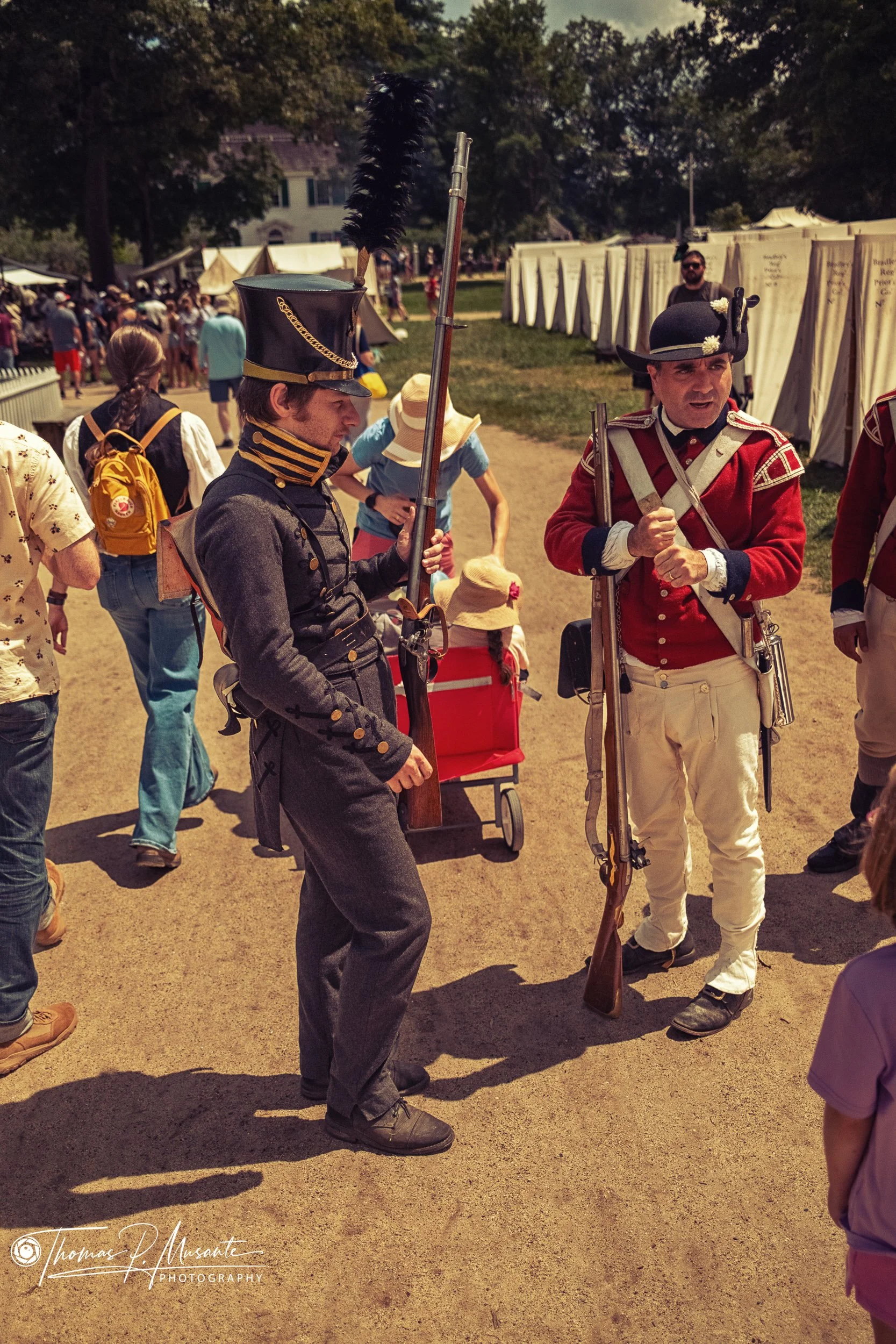
Sixty Years Apart: an 1830s Militia Interpreter and a Redcoat Side by Side
Over the weekend I found both periods standing in the same photograph many times. Two soldiers from different eras, discussing their armaments with spectators. Two interpretive worlds, neither one ours, sharing a single view.
Those are the pictures I keep coming back to. They accidentally do what I usually have to hunt for — they put two moments in time in one rectangle and let the viewer feel the distance.
Though after this weekend I am less sure "distance" is the right word.
The Village Says It Better Than I Can
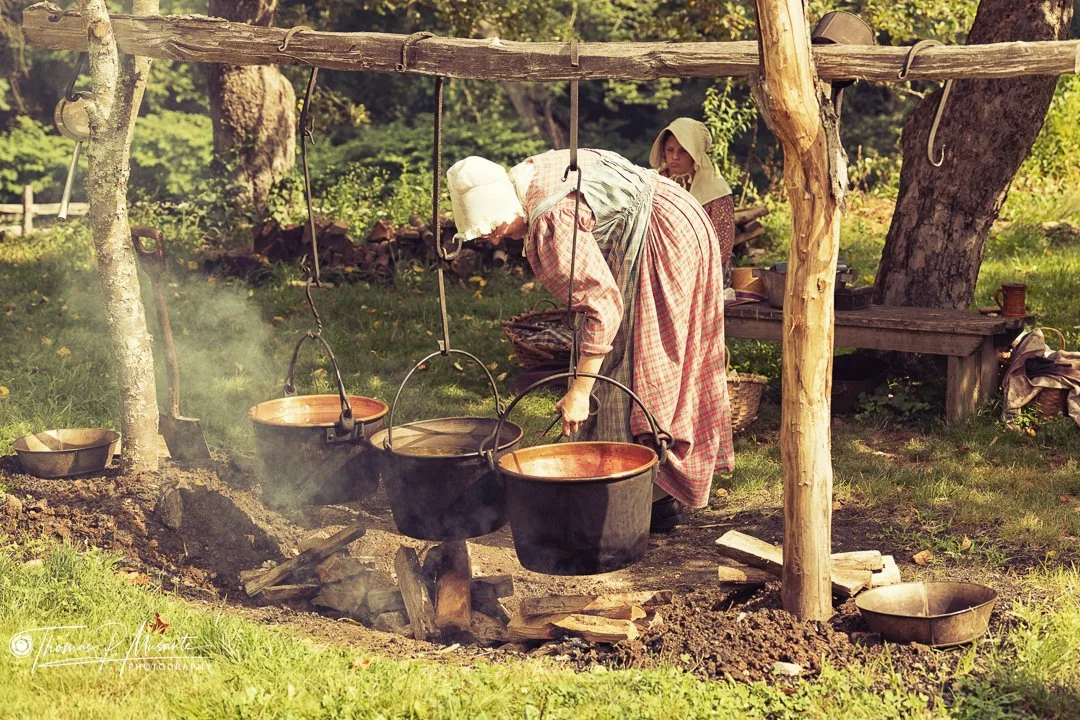
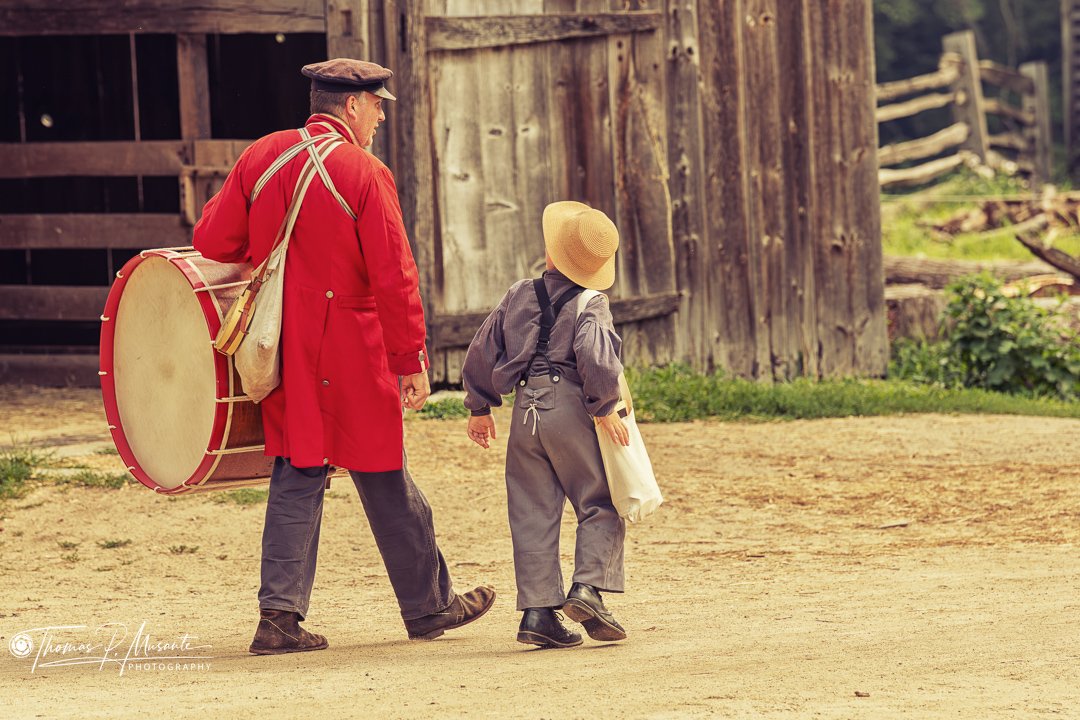
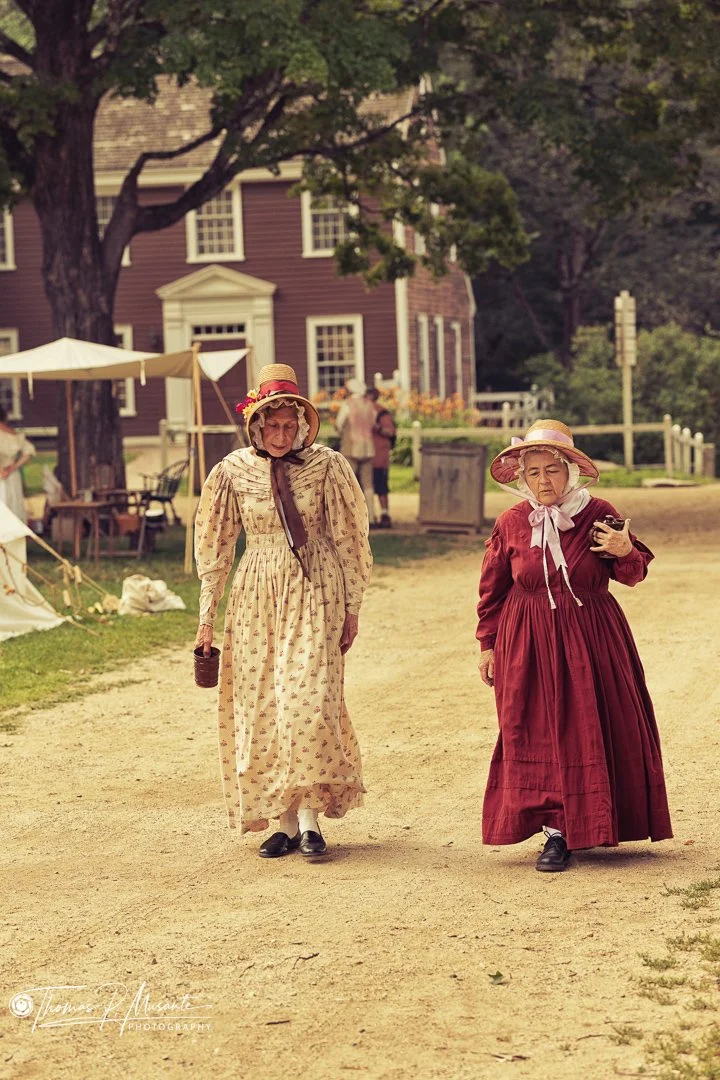
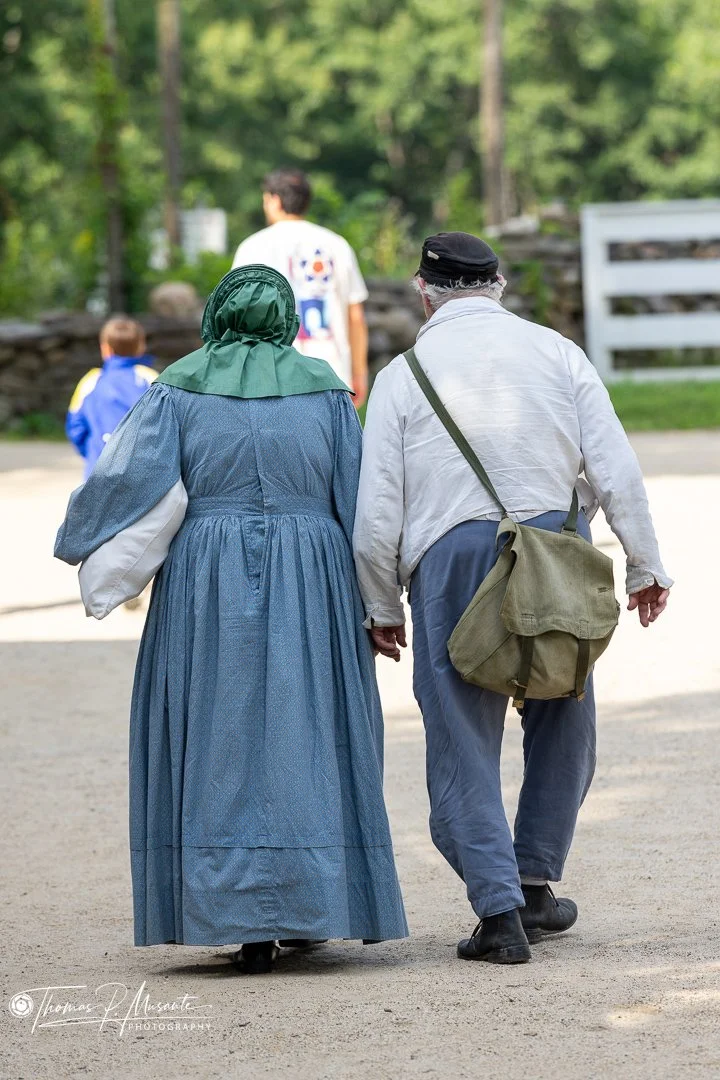
Old Sturbridge Village describes its own work as interpretation through the lens of the present: the Village explores one century while its staff and visitors live in another. That is very close to the whole premise of Rev250. I photograph people in 1776 clothing because of what happens at the seam — the sneaker under the frock, the phone in the tricorn's hand, the 2026 face doing 1776 work.
The Village has been holding that seam open since 1946. It turns out they do not think of it as a seam at all.
By late Sunday afternoon the muskets had gone quiet and the potter was still at his wheel. That felt like the correct order of things. I had earned some ice cream
— Sturbridge, Massachusetts
If you liked this post, check out:
Sources
Angela Giovanello, Public Relations, Old Sturbridge Village — statement provided to the author, August 2026.
Old Sturbridge Village, "About the Village," osv.org — interpretive period of 1790–1840, living history program centered on the 1830s, and the Village's stated principle of interpreting history through the lens of the present.
Old Sturbridge Village, Interpretation and Education Plan materials submitted to the National Endowment for the Humanities (2020) — founding date, scale, and interpretive lens.
Sebastian Restrepo, "Cannon fire brings history to life at Old Sturbridge Village during Red Coats and Rebels annual battle," MassLive, August 1, 2026 — nearly 5,000 visitors on Saturday; more than 500 reenactors, attributed to Angela Giovanello.