
Shallow Graves and Marked Stones
The side that held the field usually directed the work, burying both its own dead and the enemy's. Local residents often assisted or finished the task once the troops had gone. Along the Battle Road after April 19, townspeople and farm families buried a number of the British soldiers left behind.
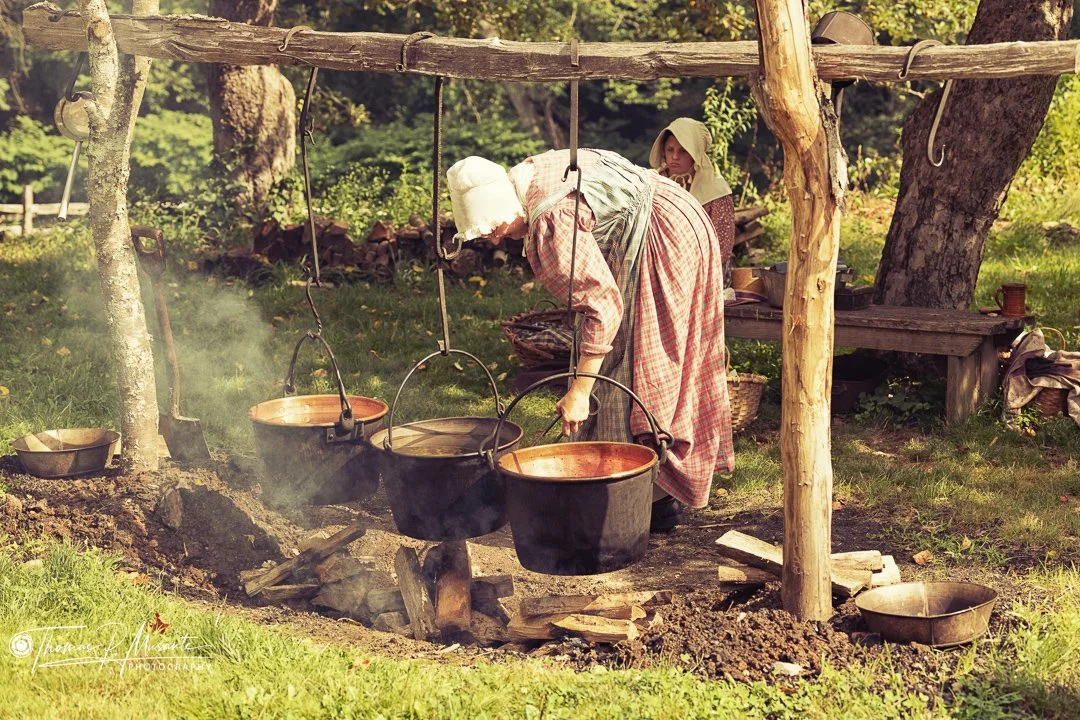
Where the Story Begins — Redcoats and Rebels at Old Sturbridge Village
The Village interprets the years 1790 to 1840, and its living history program is built around the 1830s. This is a world on the cusp of the industrial revolution, a rural economy tilting toward industry — a world that arrived a full half-century after Lexington Green. The museum opened in 1946 and now covers more than two hundred acres, with roughly forty antique buildings relocated from towns across New England and upstate New York, three water-powered mills, and a working farm.
Nothing about that description is Revolutionary. The men who fought at Concord would have been old men here, if they were alive at all.
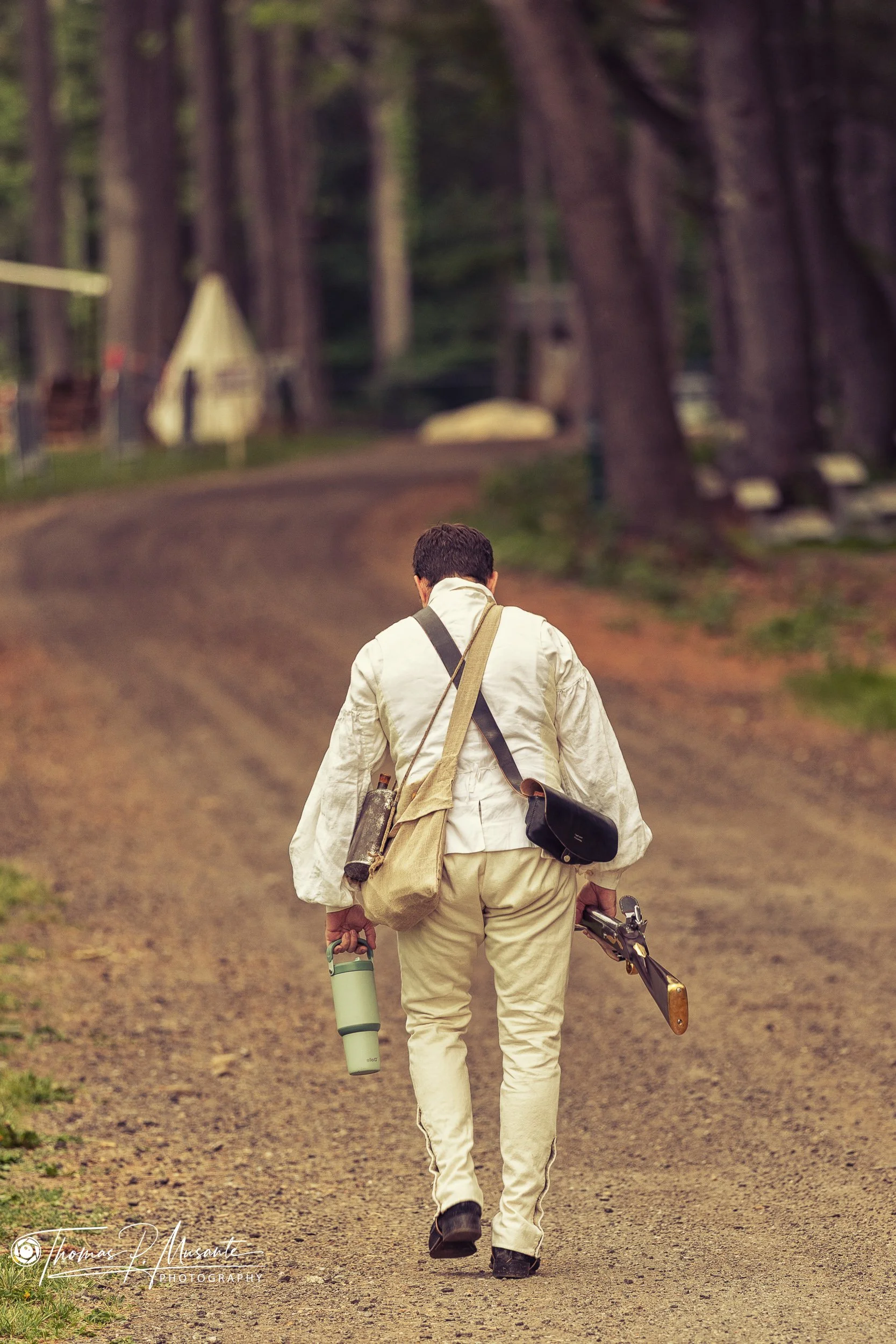
Community and Continuity in Reenactment Photography
In the early morning light before the June Putnam Heroes event in Carmel, New York, two reenactors walked quietly through the dew-covered grass, discussing how they expected the day to unfold. In that quiet moment, the 250th anniversary felt less like commemoration and more like continuation. This is the essence of my Rev 250 project: capturing the moments that connect 1776 to 2026 through candid observational photography.